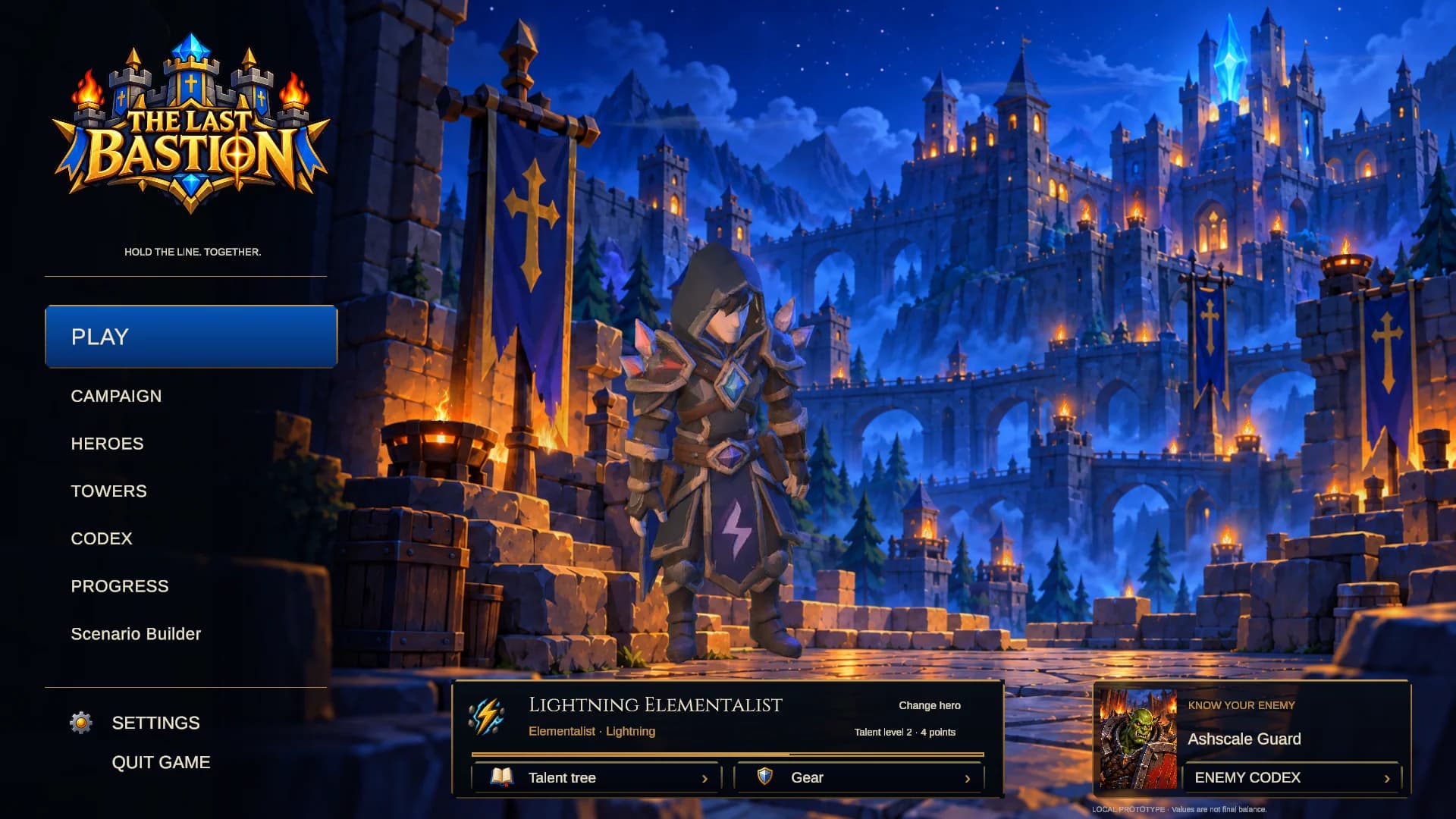
The first thing you see of a game is its menu, and ours still looked like a prototype. This week the whole front end of The Last Bastion got a new look: painted places instead of flat panels, a hero who actually stands in the courtyard, and a Codex and Towers screen you can browse like a book of the realm.
Three places that live
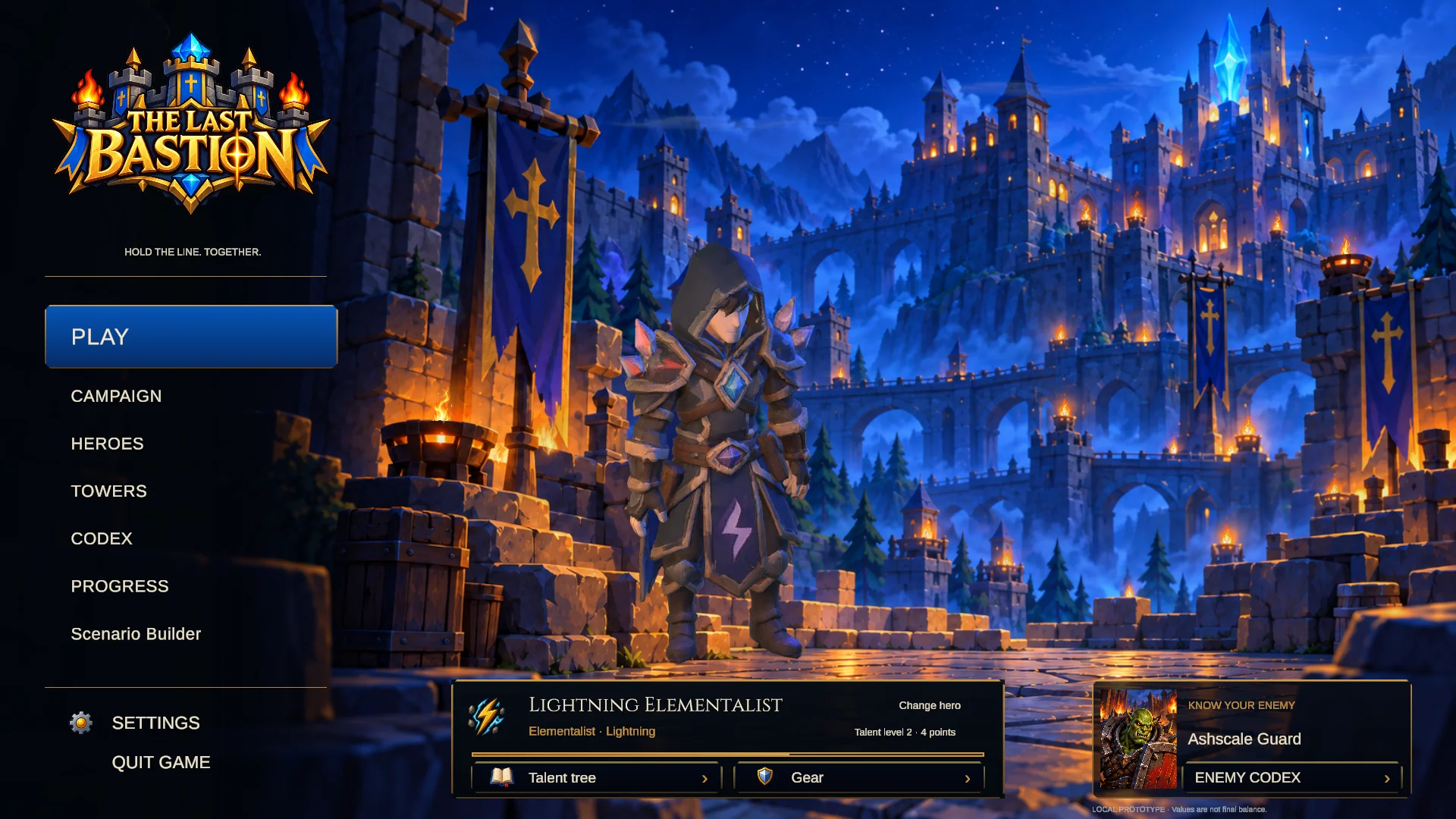
Every menu now takes place somewhere. The main menu, Heroes and Towers sit in the castle courtyard at night, the Codex in a candlelit library, and the campaign in the war room. None of them is a still picture:
- every torch and brazier in the courtyard flickers, and the fire stays inside its basket;
- distant windows and candles flicker very softly, clouds drift past and smoke rises;
- now and then a guard with a torch walks the far battlements, behind the parapet.
We kept it subtle on purpose: the menu should feel alive without pulling your eyes away from the buttons.
Your hero, in the courtyard
The hero you play with stands in the middle of the courtyard, in the same place on the main menu and on the Heroes page. He stands on his own two feet in his idle stance, breathes, and every few seconds an Elementalist briefly shows the element he chose: a little fire in his hands for a fire mage, crackling sparks for lightning.
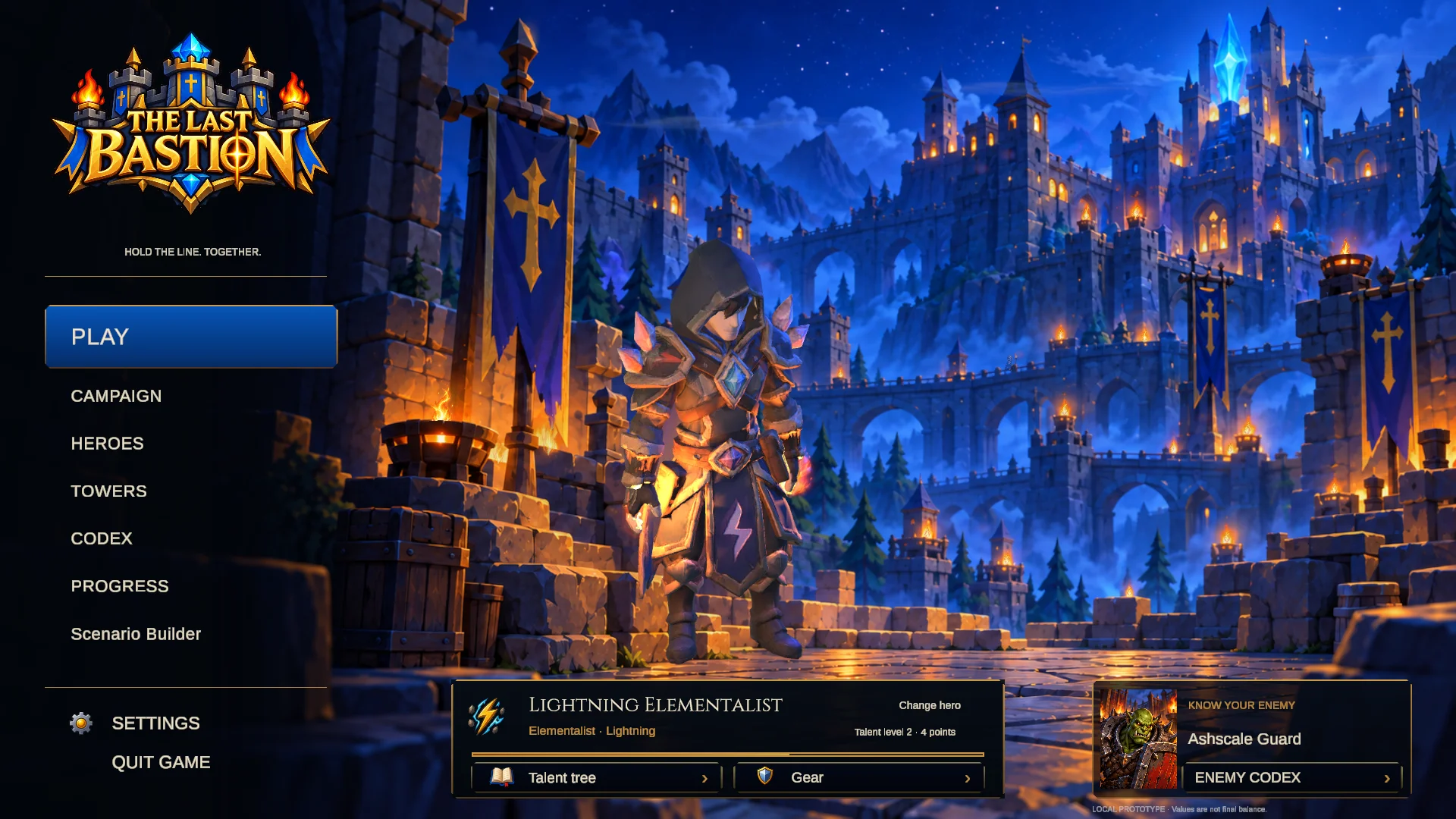
Changing your hero is a choice of its own now. Change hero opens a screen where you can look at each of your heroes first; only Play with this hero makes the change, and Cancel takes you back without touching anything.
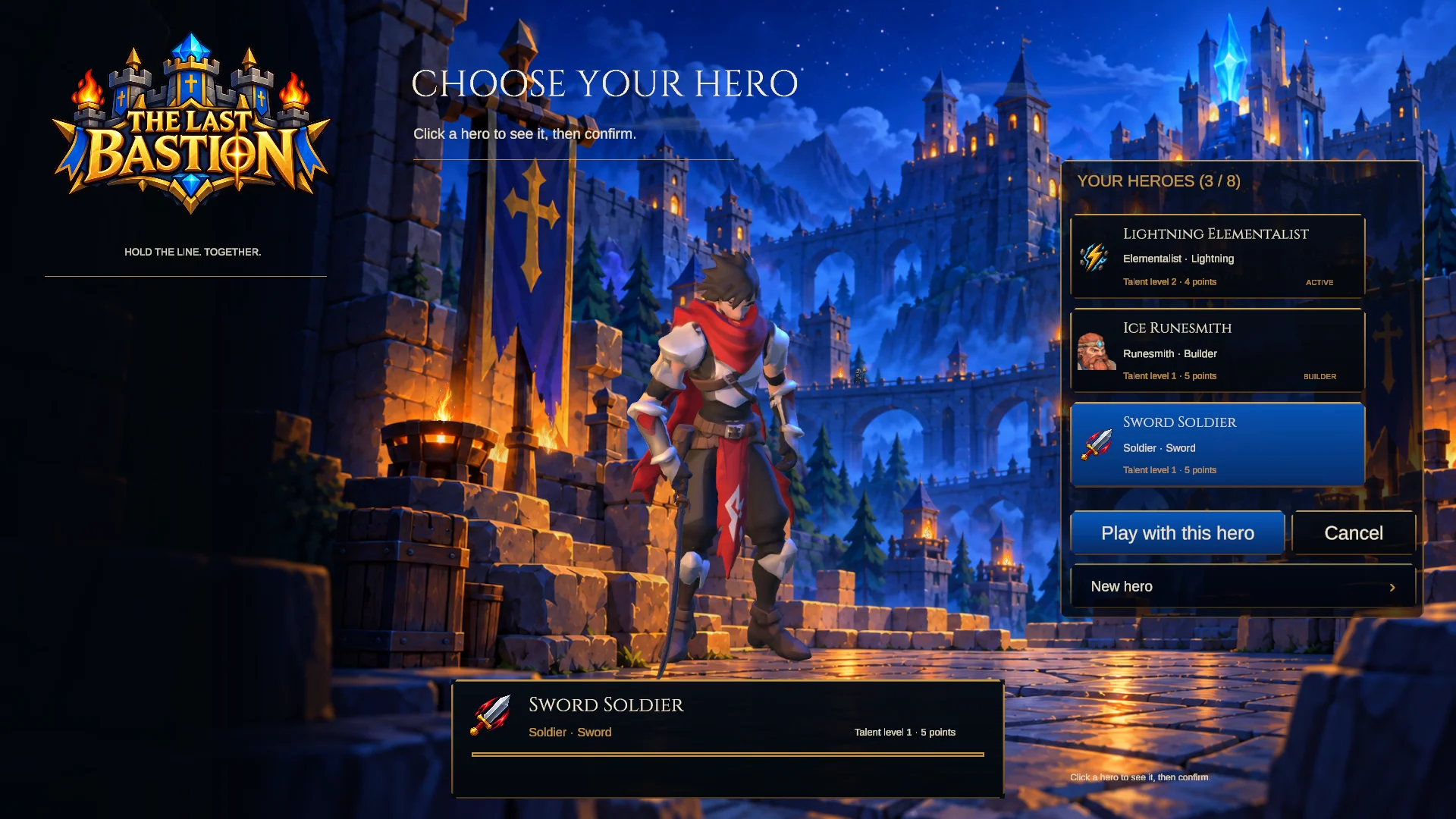
The Enemy Codex
The Codex is where you study the Horde before it reaches your walls. Filter by ground or flying units and by faction, page through the entries, and turn the large model by dragging it.
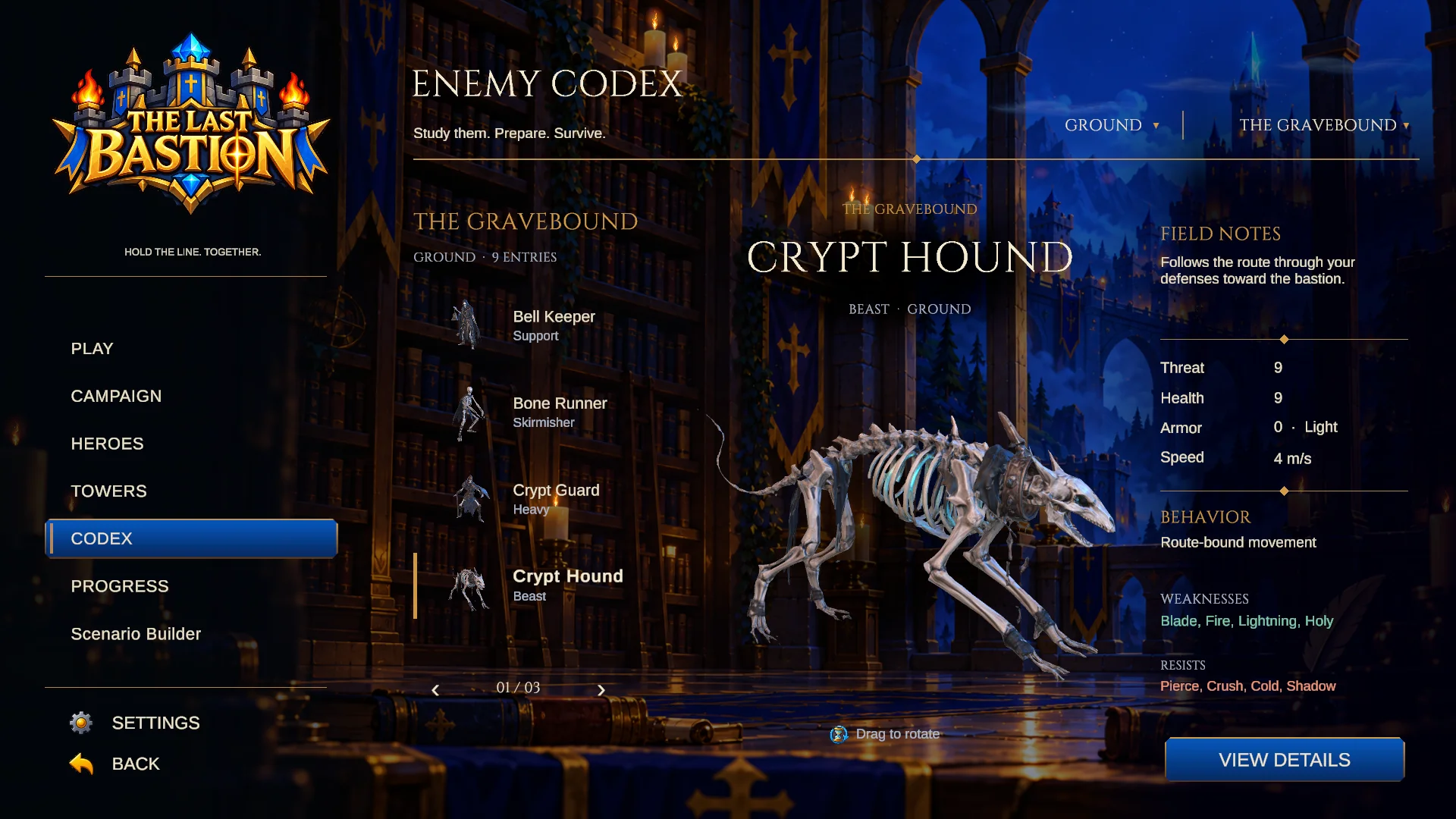
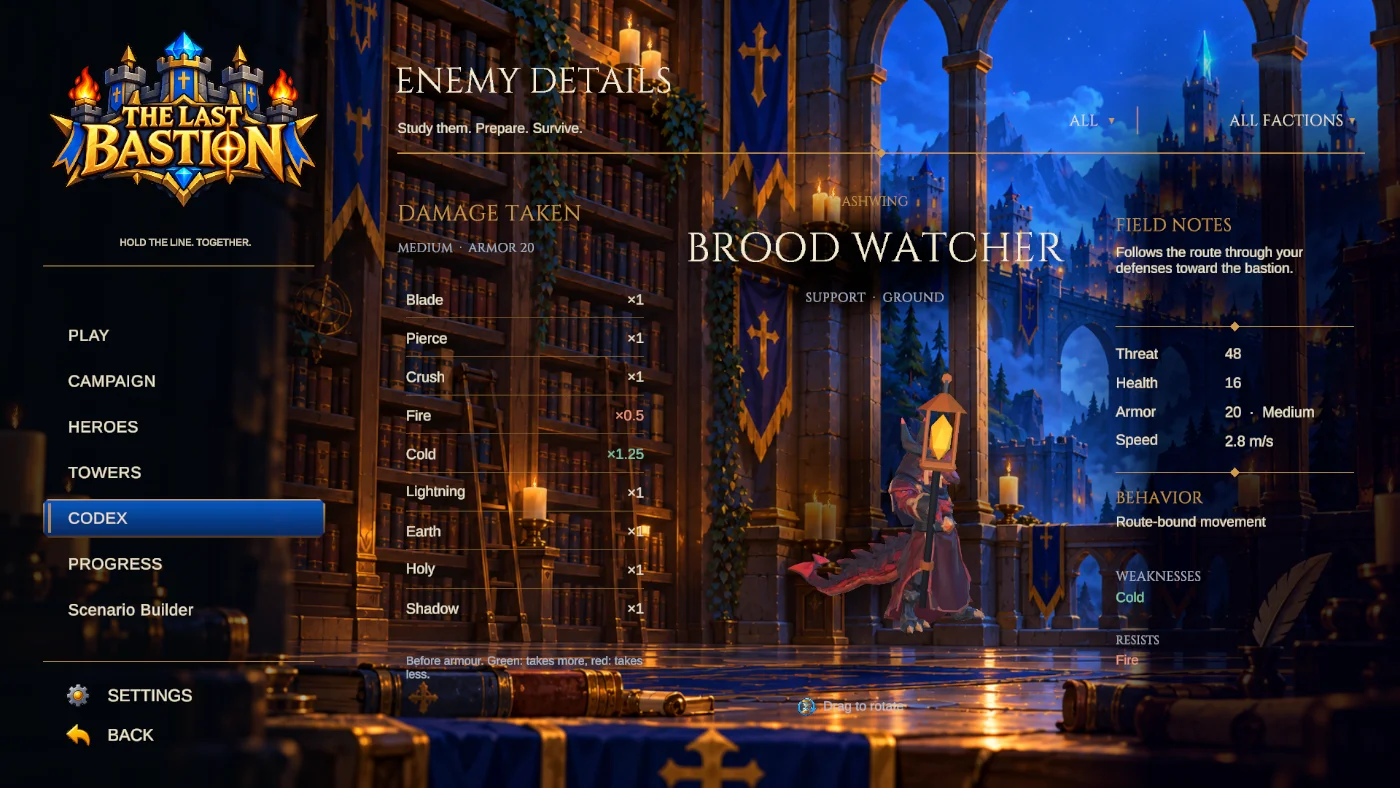
Everything on the page comes straight from the game itself: threat, health, armour and speed, how the creature moves, and what it is weak to. Weaknesses and resistances are read from the same damage table that decides every hit, so the Codex can never disagree with the battlefield. Under View details you see, for every damage type, exactly how much damage the creature takes.
The bastion's defences
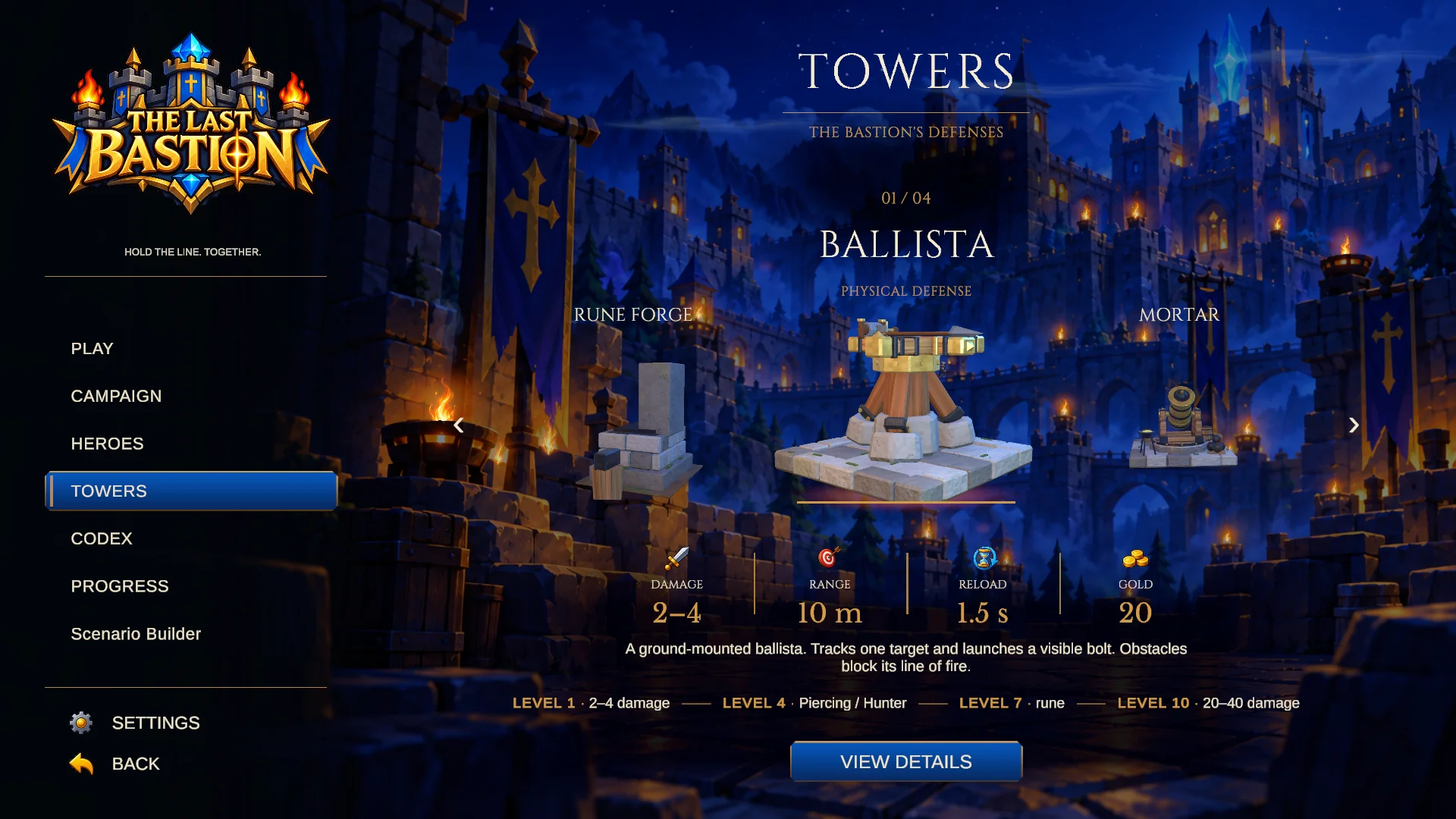
The Towers screen shows one defence at a time with its neighbours beside it: the Ballista, Mortar, Frost Tower and Rune Forge. Under the tower you see its damage, range, reload time and gold cost, and a short track of what its levels bring: when you choose its form, when its rune unlocks and how hard it hits at the top.
And the rest
The campaign home and the campaign book got the same treatment, with a large Continue card, clearer chapters and new parchment. The Codex opens on eight illustrated categories.
All of this is still work in progress: the values in the Codex and on the Towers screen are prototype numbers and will change as we balance the game. Let us know what you think of the new look!