In the first hero post the Elementalist got a body and a staff that grows. This time it's about what he actually does. The easy route would have been six projectiles in six colours that each deal twenty damage. I didn't want that. Every element should change how you play, help the builder in its own way, and have things it is clearly bad at.
How elements work
You choose an element at the start of a run and again at levels 5, 10 and 15. Each choice either opens a new element or ranks up one you already have, from I to IV. Every rank unlocks the next ability of that element, and rank IV is its ultimate. So you can go deep into one element, or spread out and mix. Mixing gives you more tools and some combos; going deep gets you to an ultimate sooner.
Between runs, a talent tree decides what can show up in a run at all. Unlocking a path in the tree doesn't hand it to you; you still have to be offered it and pick it during the run.
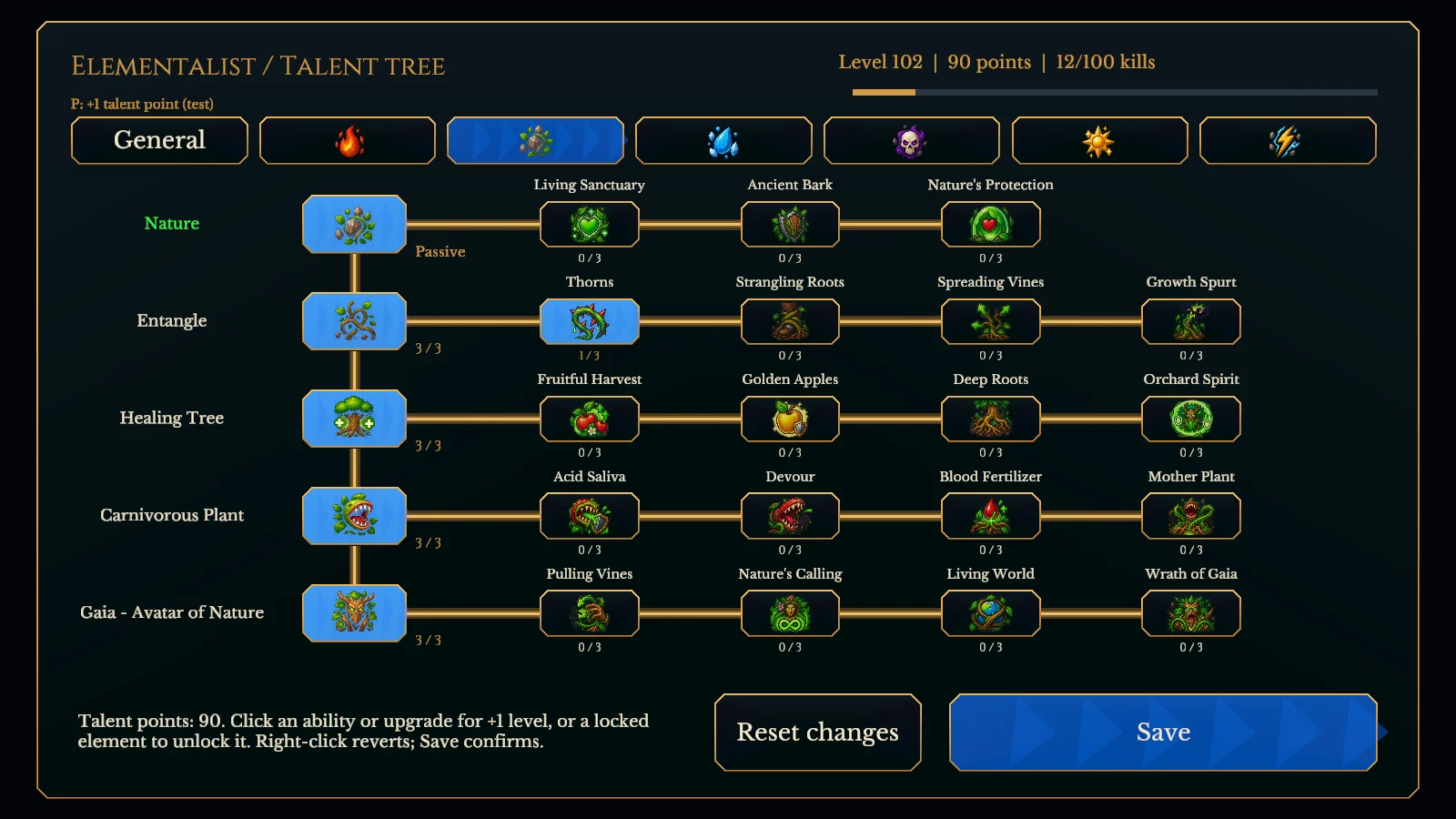
The talent tree: element and passive at the top, then each ability with its upgrade paths, down to the ultimate.
Fire: pressure over time
Role: area damage and burning. Bad at: protecting anyone.
Fire was the first element and grew in the most steps. It started with a fireball and a meteor on the old prototype staff. Its passive, Burning Soul, makes area spells stronger and gives hits a chance to set enemies on fire, up to five stacks of burn per enemy. The kit runs from Fireball (which you can now aim at walls, enemies or the open sky) through Flame Wall and Flame Burst. Flame Burst charges up, and if you release it right at the white flash you get a stronger blast.
The first ultimate was a big Inferno. On 26 September I replaced it with something that felt like an ending.
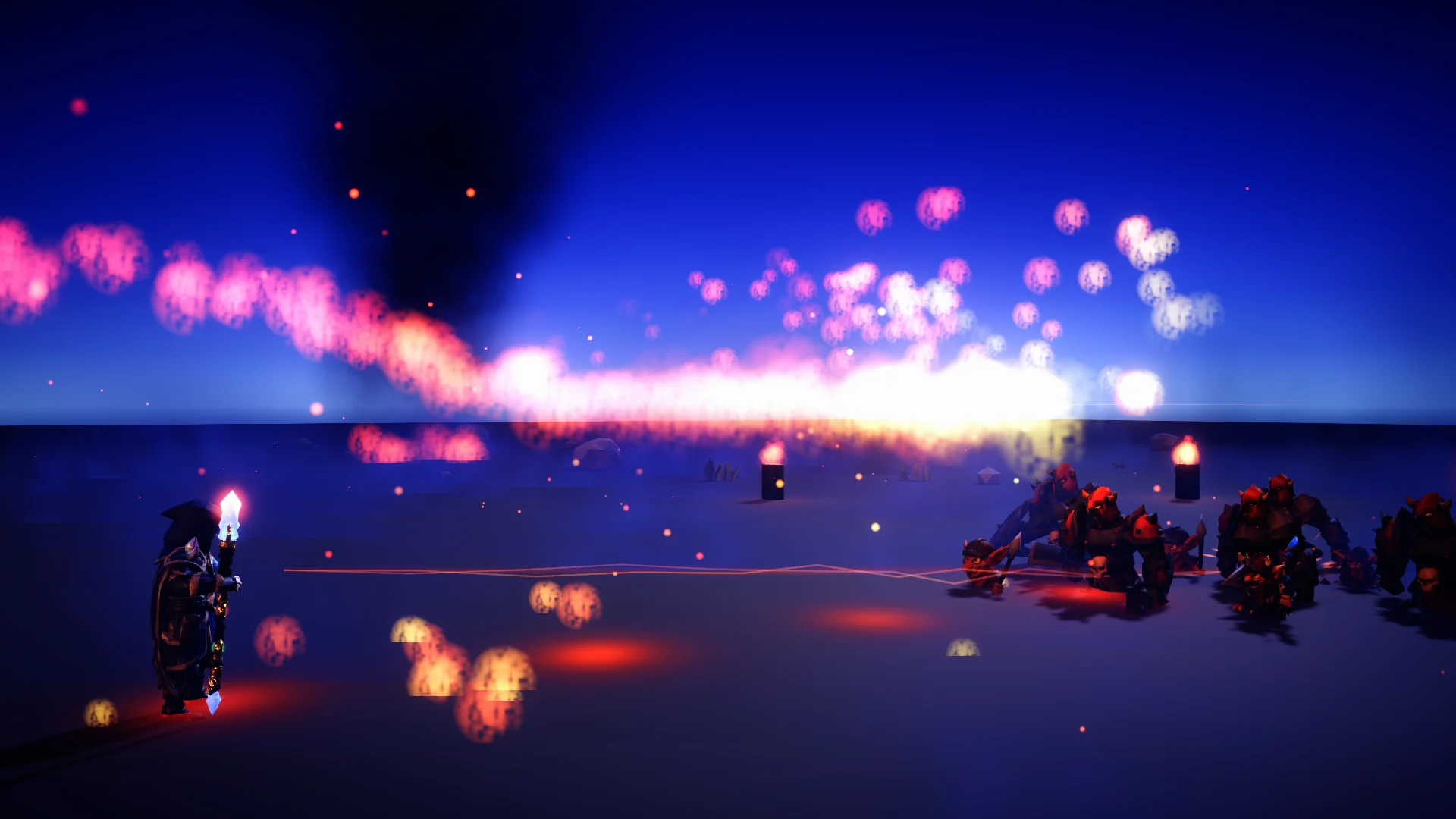
Fire IV, Phoenix: it forms above the mage, flies over the enemies leaving burning ground, then dives.
The Phoenix grows above the mage, then flies toward your target, burning everything it passes and leaving a trail of fire on the ground. At the end it dives into a big explosion. And you decide when: press the key again during the flight and it dives right there.
Nature: the builder's best friend
Role: control and healing. Bad at: bosses and flying enemies.
On 16 September Earth and Nature became one element. Nature is the most direct help for the builder: the Healing Tree drops apples that heal heroes, and the builder can pick up an apple and carry it to a damaged building to repair it, free of charge. Entangle grabs enemies that walk in, then slows them. The Carnivorous Plant bites, and three bites eat a small enemy whole. Place the plant right under an enemy and it bites as soon as it comes out of the ground.
The early versions were simple shapes, just enough to test the rules. The plant later got a real model, with jaws and a stem that move on their own and a bite aimed at its prey.
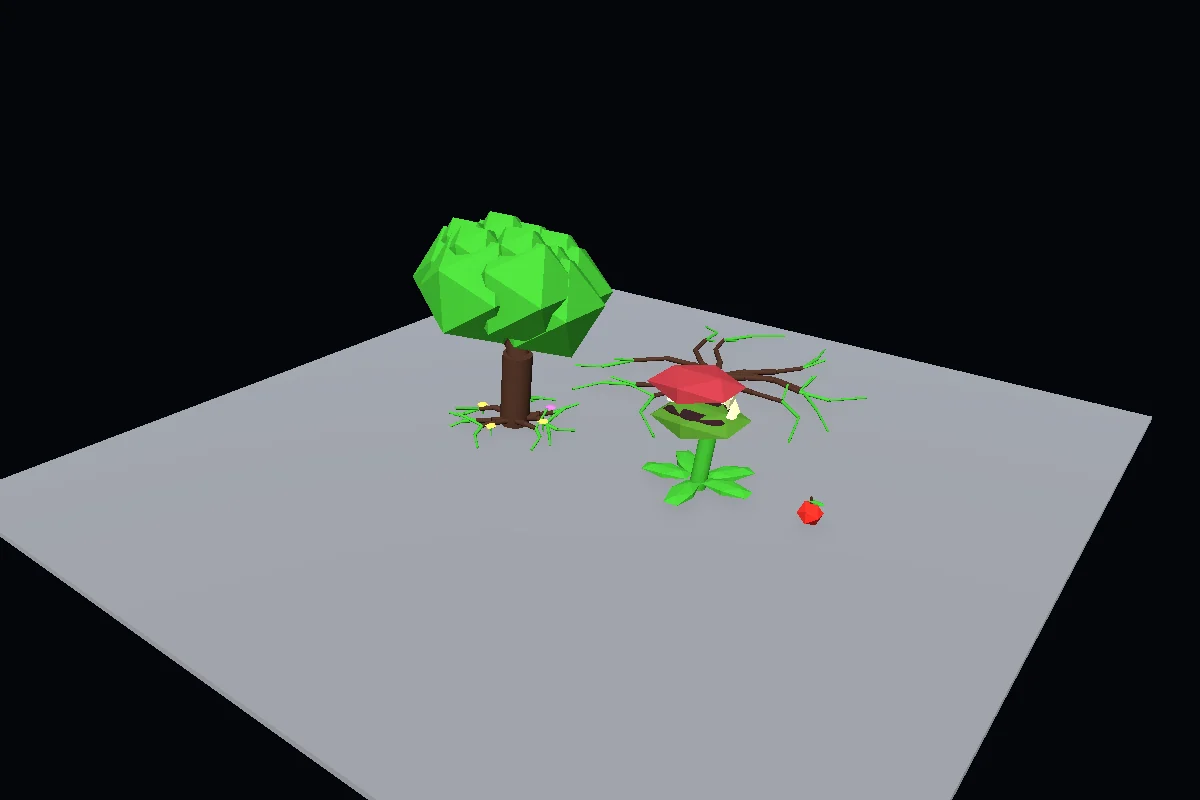
The first Nature summons: simple shapes to test healing, summoning and biting.
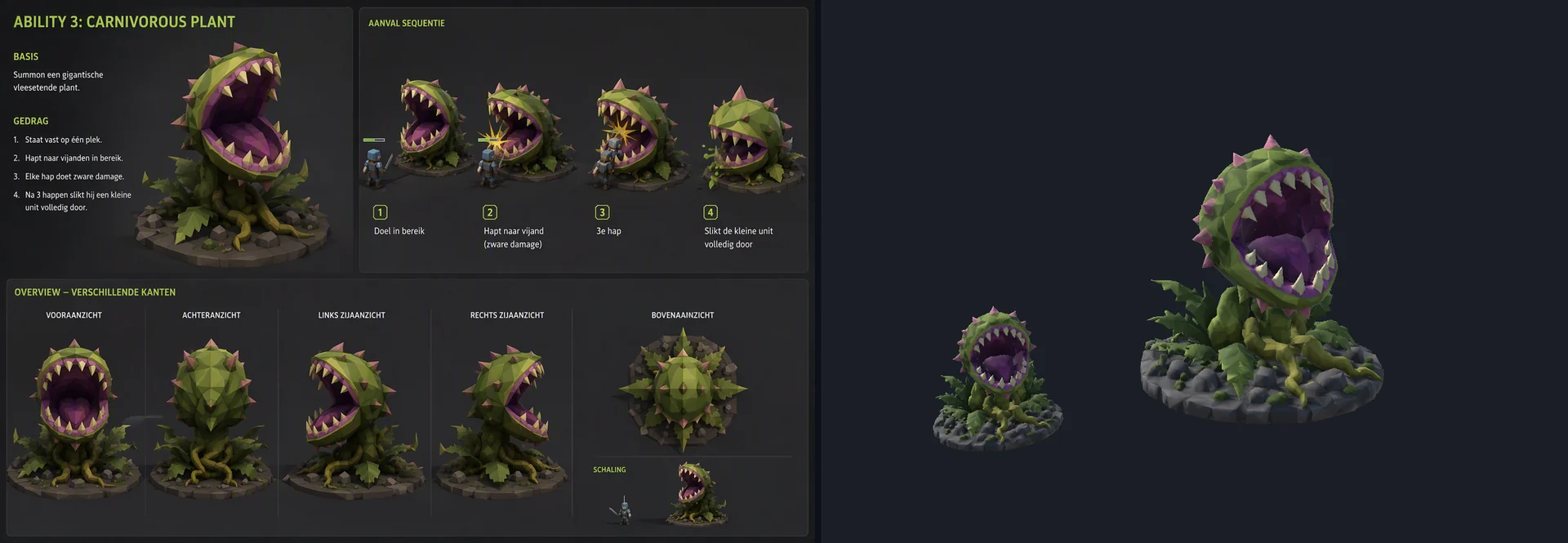
From concept to model: the Carnivorous Plant.
The ultimate, Gaia, Avatar of Nature, turns the mage into a living part of the forest for 30 seconds. While it lasts, he heals buildings around him, gets a lot more armour, and casts Entangle, plants and apples on his own.
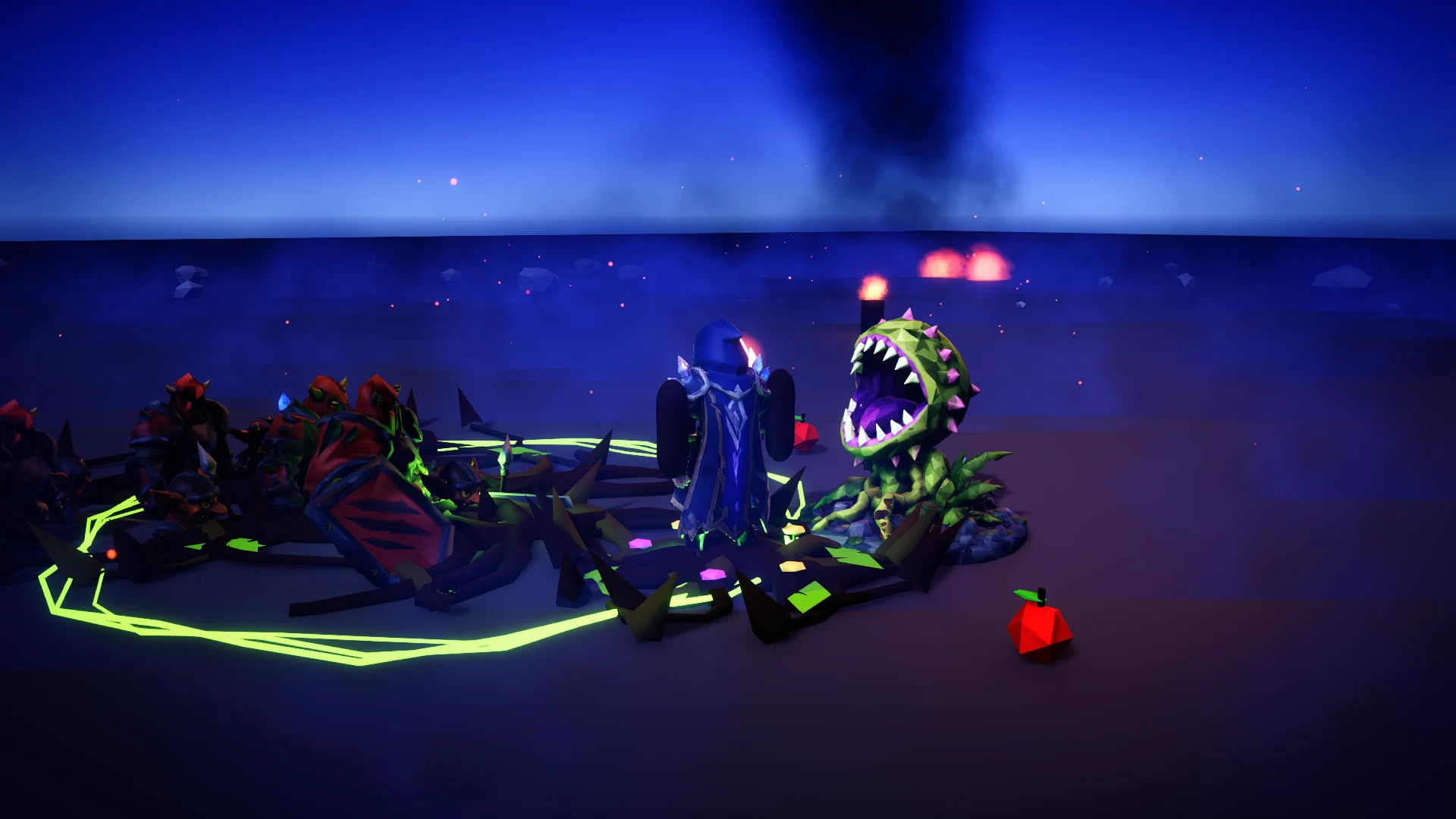
Nature IV, Gaia: roots, plants and apples appear on their own around the mage.
Ice: buying time
Role: slowing, freezing and speeding up the team. Bad at: damage, unless enemies are frozen.
Ice is about time. Its passive aura makes nearby heroes and towers recover faster and enemies move slower. Hits build up frost until an enemy freezes, and frozen enemies take more damage. Water Wave pushes a whole lane back; if it pins enemies against a wall, they get stuck for a moment. Glacial Prison locks a group in place.
The ultimate, Arctic Storm, is a fifteen-metre storm that moves with the mage for thirty seconds. Everything inside slows down and freezes, towers fire faster and heroes recover faster. Every new freeze inside the storm explodes.
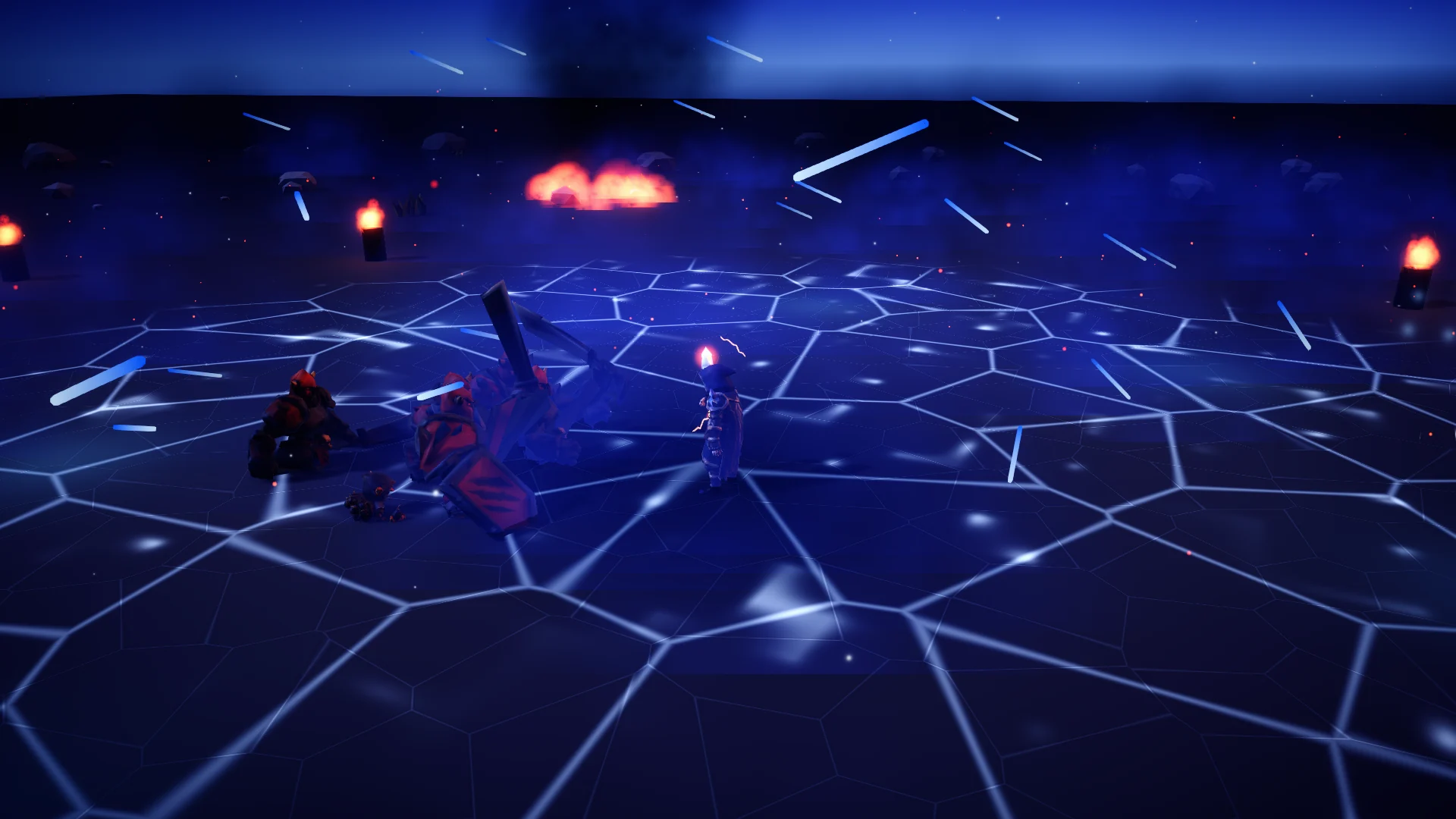
Ice IV, Arctic Storm: the ground freezes over around the mage, and every new freeze explodes.
Lightning: speed and chains
Role: fast damage, chains and the answer to flyers. Bad at: running on an empty tank; its ultimate needs a big mana pool.
Lightning arrived on 25 September with its own kit. Its idea is Static: every staff hit adds a charge, and at five charges the enemy overloads, releasing a shock and a short stun. Chain Lightning jumps between enemies and prefers the ones that are about to overload. Lightning Spear pierces everything in a line. Thunder Strike shows a warning circle first, so your teammates can see where it will land.
Its ultimate, Stormcaller, makes the mage the eye of the storm. A bolt strikes him, a storm cloud forms overhead, and for twenty seconds lightning hits an enemy around him every second while he attacks and moves faster.
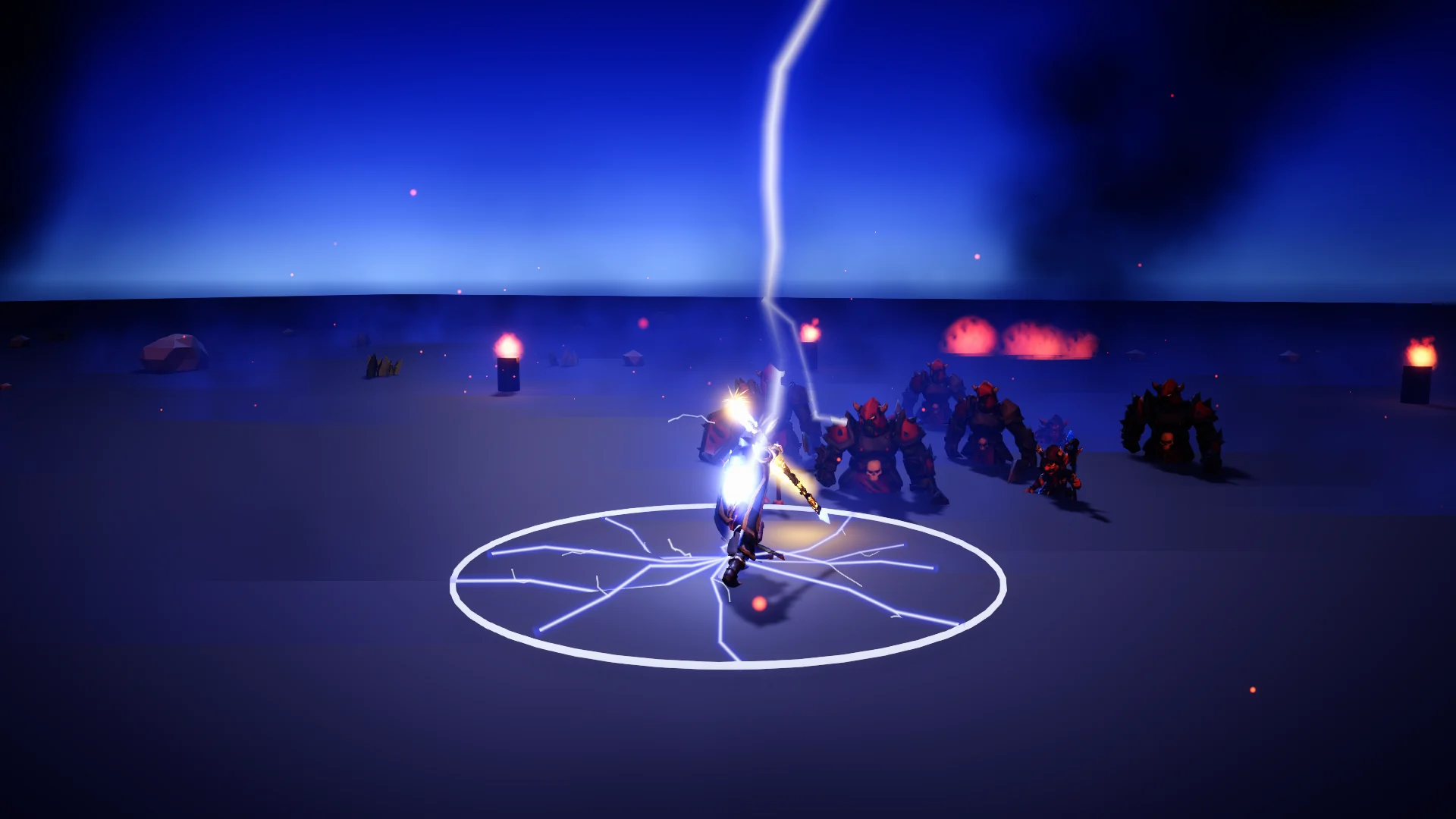
Lightning IV, Stormcaller: a bolt strikes the caster, then lightning hits the enemies around him.
Holy: protection and judgement
Role: shields, healing and making enemies easier to kill for everyone. Bad at: dealing damage on its own.
Holy also got its own kit on 25 September. Its hits mark enemies, and a fully marked enemy is Judged: for a few seconds it takes more damage from every source, including towers and other players. Sanctuary protects heroes and repairs living buildings in a circle. Divine Aegis shields everyone nearby; if it lands just before a hit, the shield goes further. That is the builder rule for Holy: anything that blesses a place also protects the buildings standing in it.
The ultimate, Heaven's Gate, unfolds wings of light around the mage and opens a gate above the target. A column of light stands there for twelve seconds, hurting and slowing enemies while healing heroes and repairing buildings. When it closes, Final Judgment hits everything still inside.
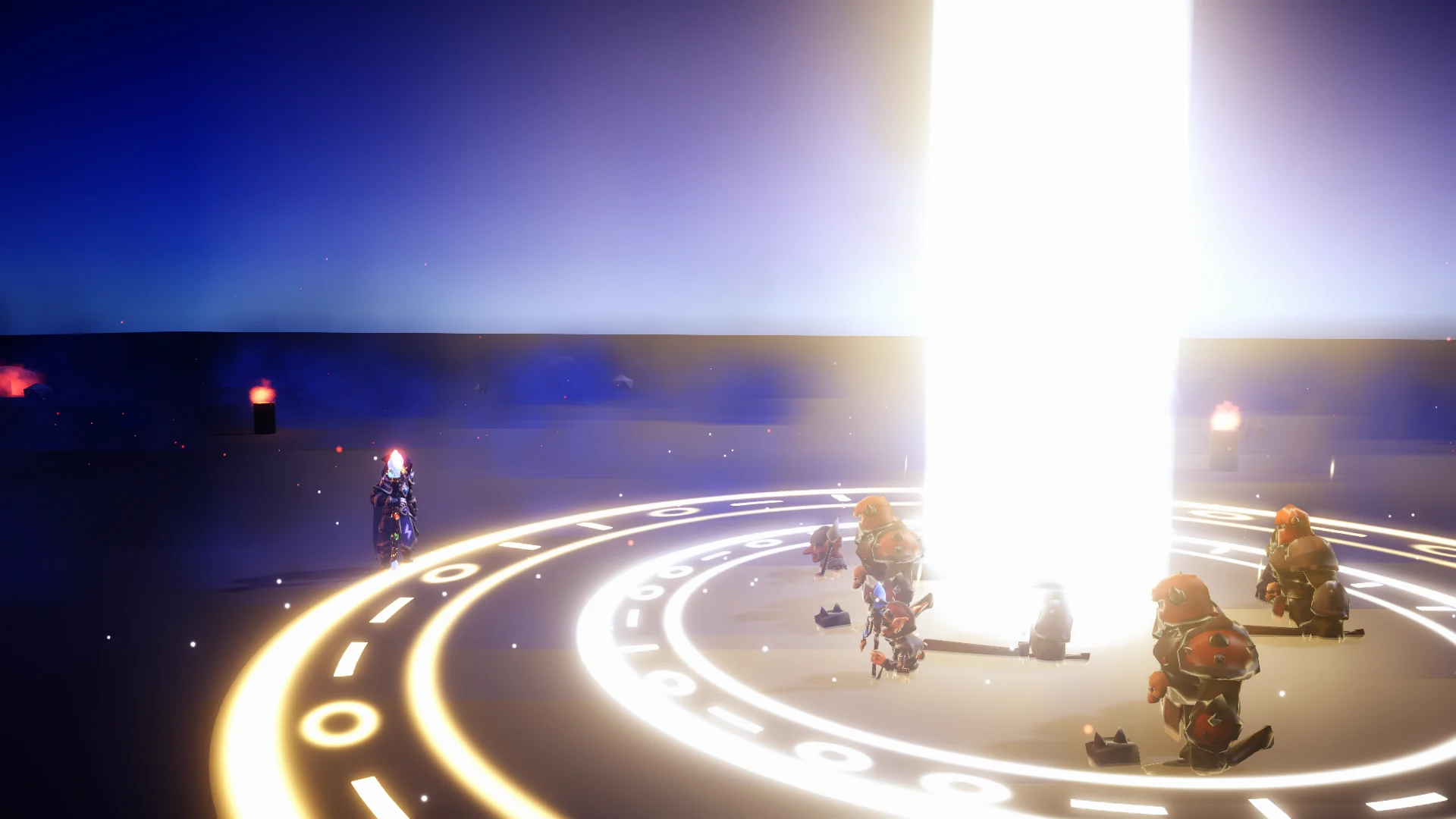
Holy IV, Heaven's Gate: a column of light that hurts enemies and heals your side.
Shadow: an army of your own
Role: summons and curses. Bad at: anything quick and precise.
Shadow raises skeletons that fight for you, weakens enemies with a flaming-skull Shadow Bolt and rots whole groups with Curse of Decay. One fix came straight out of testing: the code once allowed 58 permanent skeletons. That was fun for a moment, then it broke both the balance and the frame rate. Now you keep three, and an upgrade raises that.
The ultimate, Undead Army, opens a summoning circle and pulls fifteen warriors, five archers and two bone dragons out of the ground for thirty seconds.
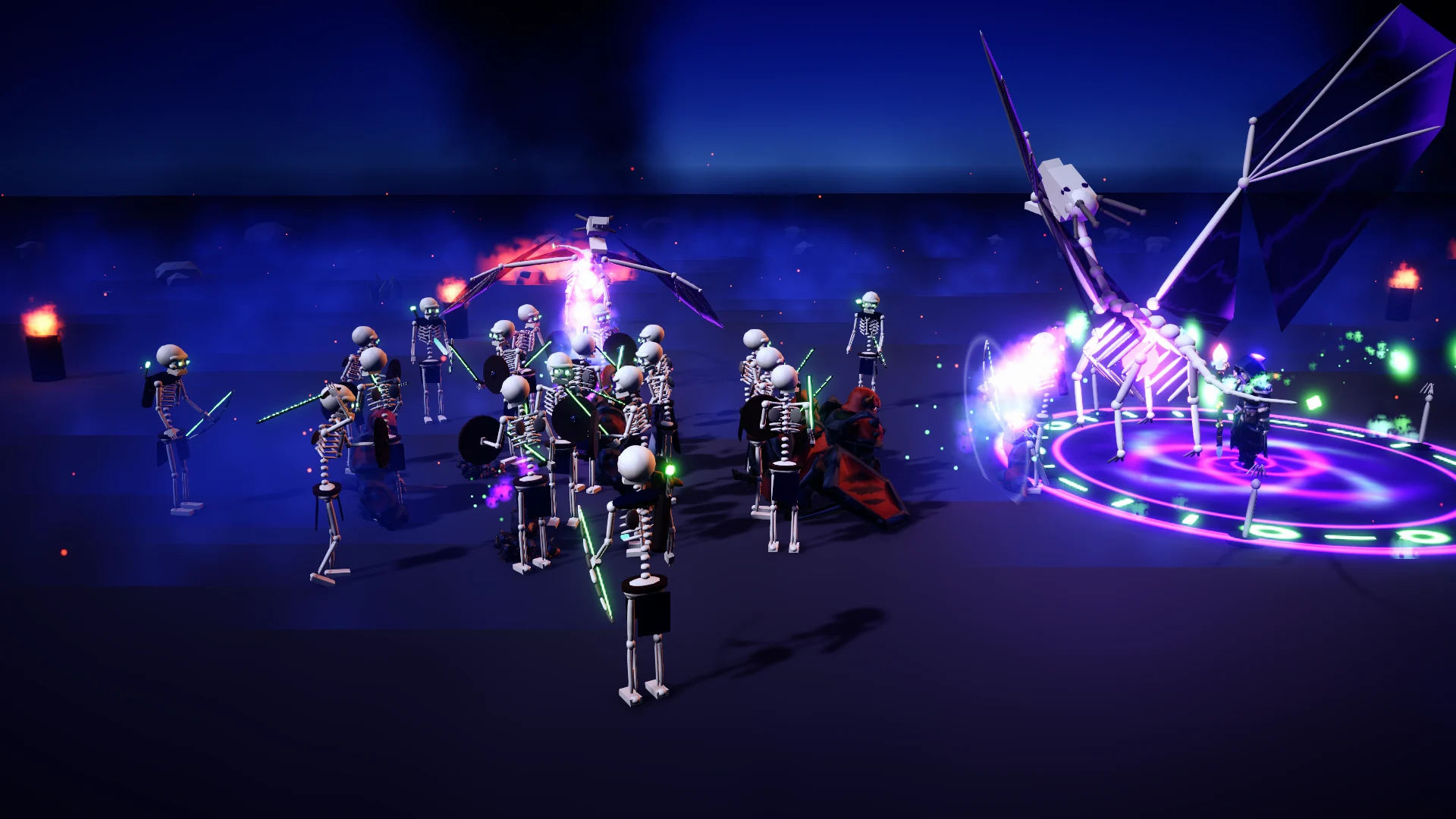
Shadow IV, Undead Army: skeletons climb out of the ground, and two bone dragons join them.
Mixing elements
Some pairs of elements unlock a combo spell. Shadow and Holy together give Eclipse: a dark moon slides in front of a golden sun, the world dims, and at totality the light strikes down. It is a combo, not an ultimate, and there isn't one for every pair. Finding them is part of the fun.
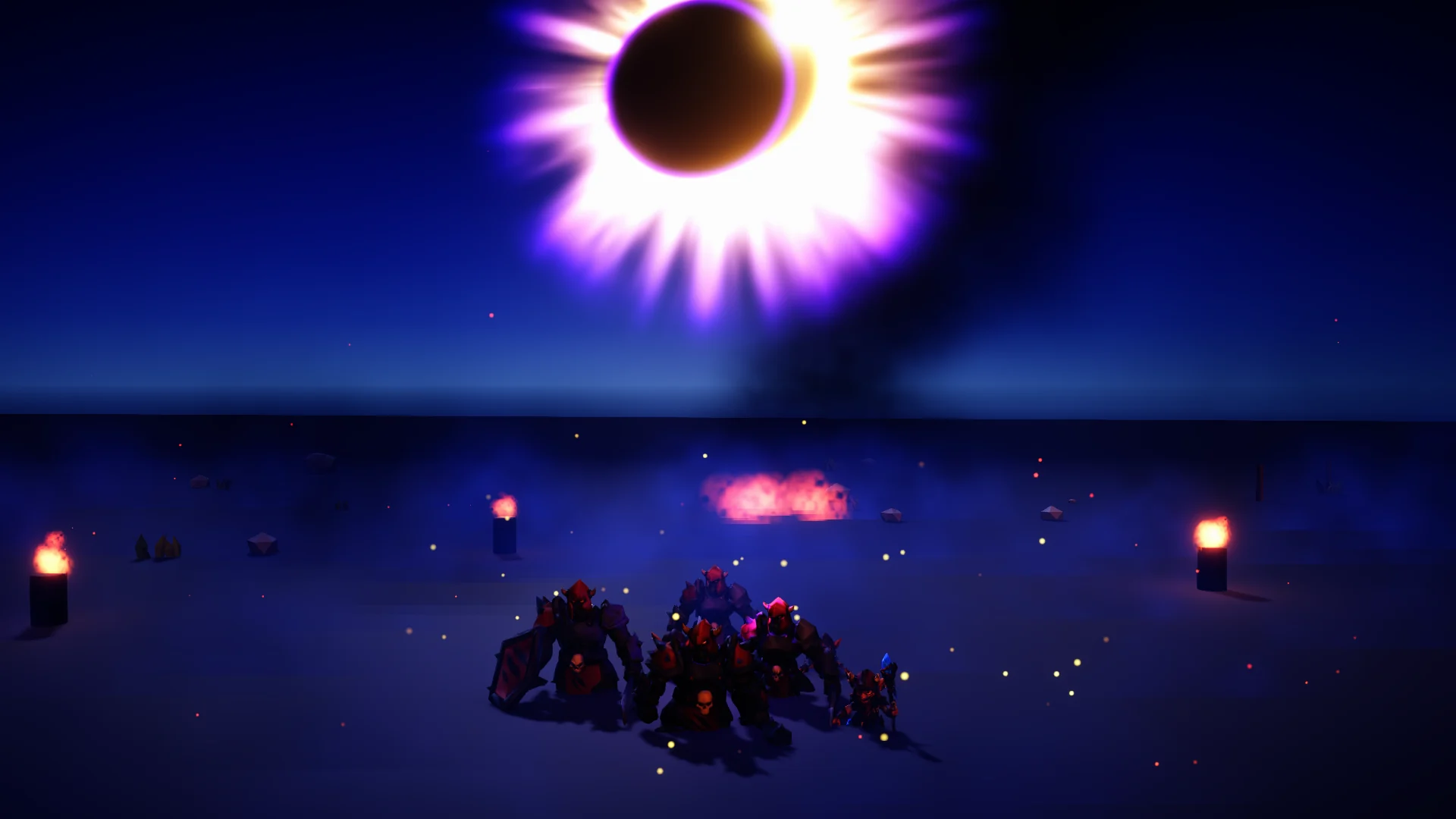
Shadow + Holy, Eclipse: damage and healing land at totality.
Tier IV has to feel like a reward
My rule for the ultimates was simple: they should be powerful, look powerful and feel powerful when you cast them. A bigger version of an early spell doesn't do that. Each ultimate has its own build-up (the Phoenix forming, the bolt hitting the caster, the wings unfolding), its own way of changing the fight, and in the Phoenix's case a decision about the perfect moment.
All the ultimates in this post are captured in-game, from the current build, on a test field at night.
Next time: the Soldier, and two very different ways to swing a weapon.