After weeks of spell kits, I wanted the Soldier to play to a completely different rhythm. No mana, no casting time: stamina, footwork and timing. The Soldier chooses one weapon per run, and right now there are two very different ones: the Sword and the Maul. A third, Sword & Shield, is greyed out on the selection screen for now.
Link to Video: https://youtu.be/zejTbP-4jRU
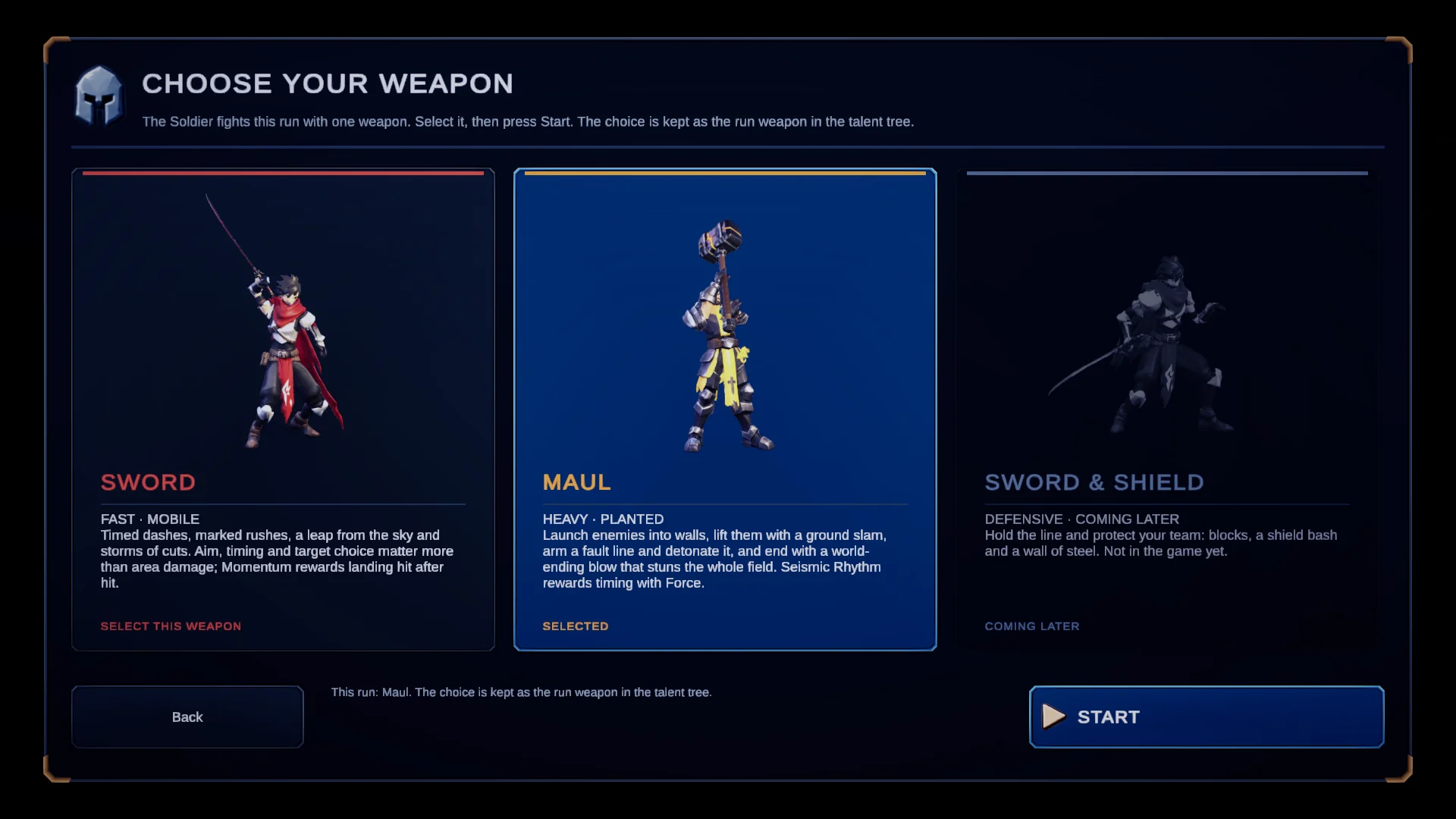
The Soldier's weapon screen. One weapon per run.
The Sword: a fast interceptor
My brief for the Sword was a hero who races after whatever slips through the defence and takes out the dangerous targets first. Fast, mobile, and above all skill-based. Almost every ability is aimed by you, and most of them open a short window in which the next press is worth more. Hit your timings and the Sword chains from one enemy to the next; miss them and you're standing in the middle of an orc pack without stamina.
It started on paper. These are the concept sheets the whole look and animation set was built from:
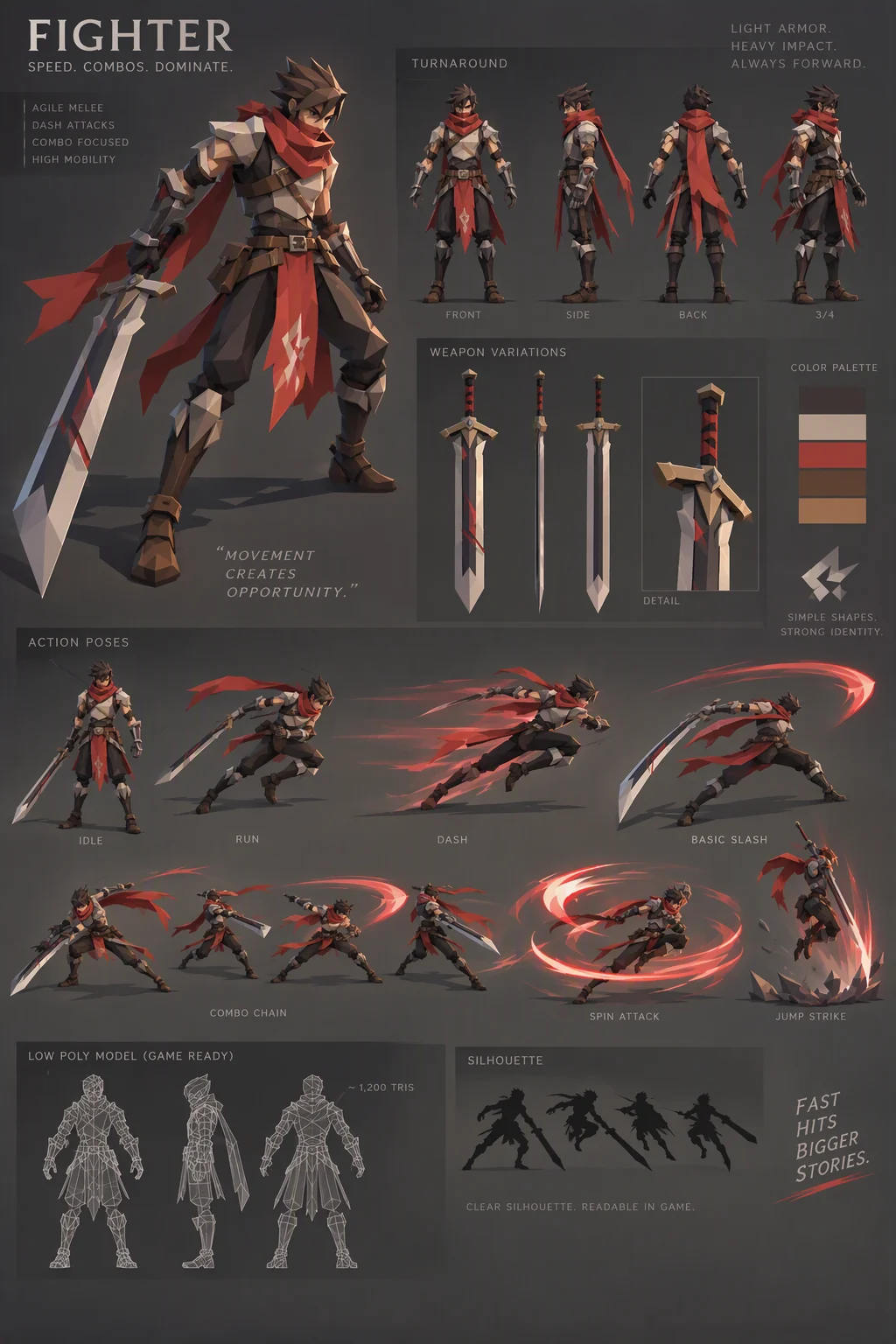
Concept art: the Sword Fighter's look, with the red scarf and katana.
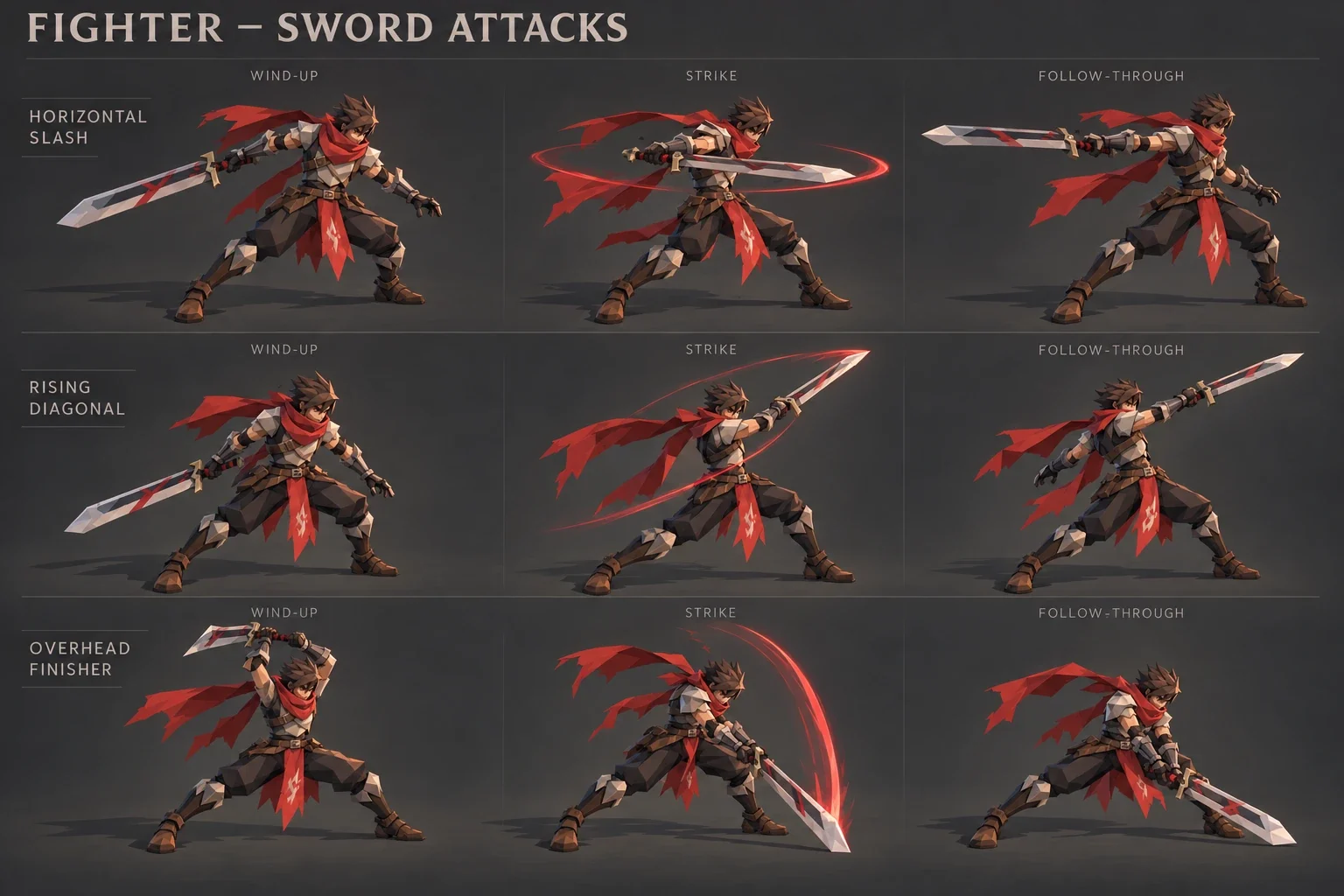
Concept art: wind-up, strike and follow-through for the attacks.
Four abilities, four windows
- Strike. Aim and press: a short brace, a lunge, a cut. If it hits, you have about a second to press again for the next Strike. Miss, and the chain ends.
- Blade Rush. Hold the key and the Soldier drops into an iaido stance. Sweep your crosshair over enemies to mark them 1, 2, 3, then release, and he dashes through them in that order.
- Skyfall. Aim a leap, jump, and press again in the air to dive. Press right at the top of the jump for a perfect dive. While diving you can still steer with the camera.
- Endless Assault. Mark an area and storm through every enemy in it. Each new round has to start within 1.6 seconds of the last, and you aim where it ends.
Under it all runs Momentum: every hit that lands gives a few percent extra damage, up to five stacks, and they drop off two seconds after your last hit. Abilities cost stamina and hits give some back, so a good chain keeps itself going and missing drains you fast.
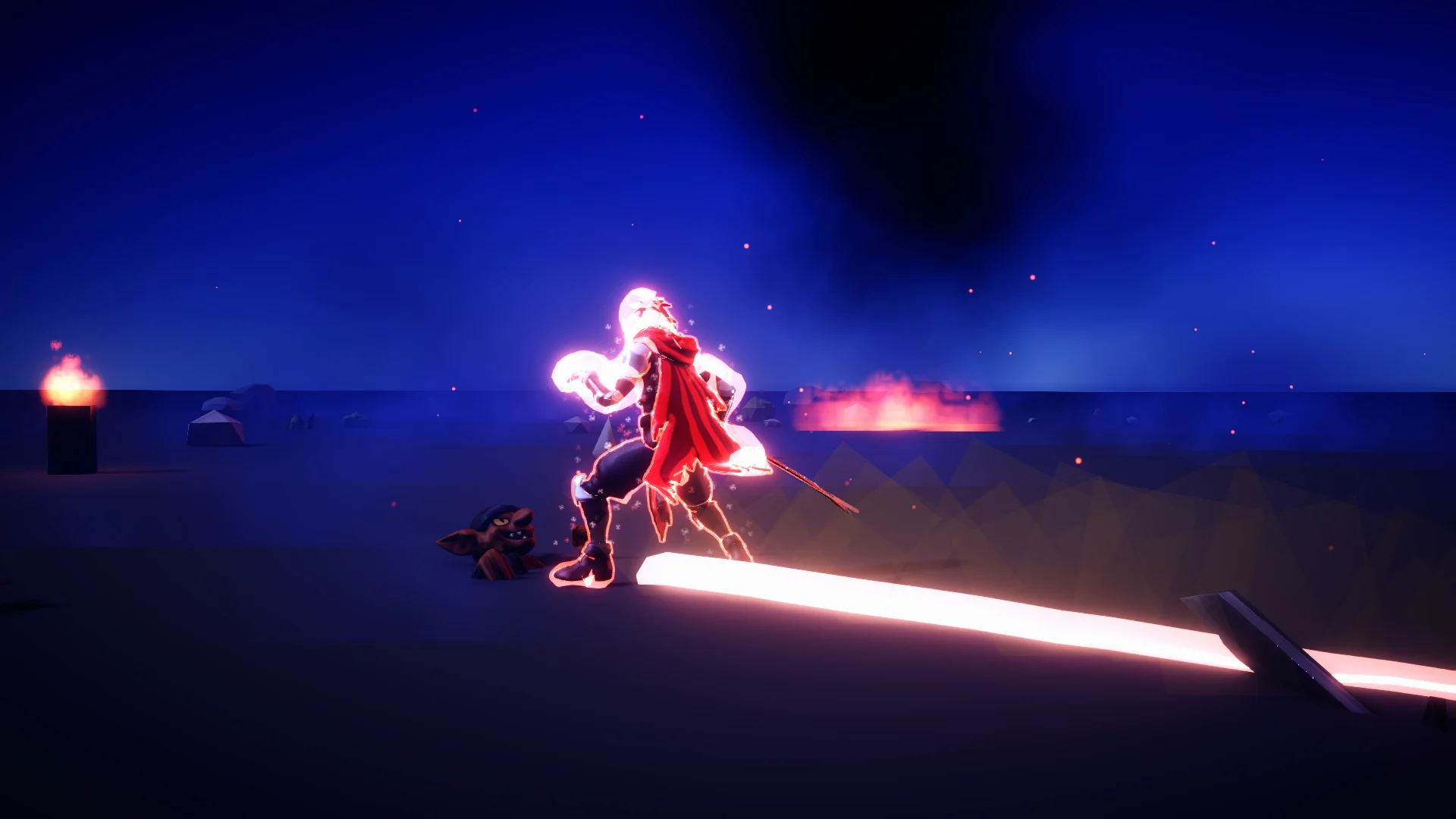
Strike: the lunge and the cut, with the crimson trail.
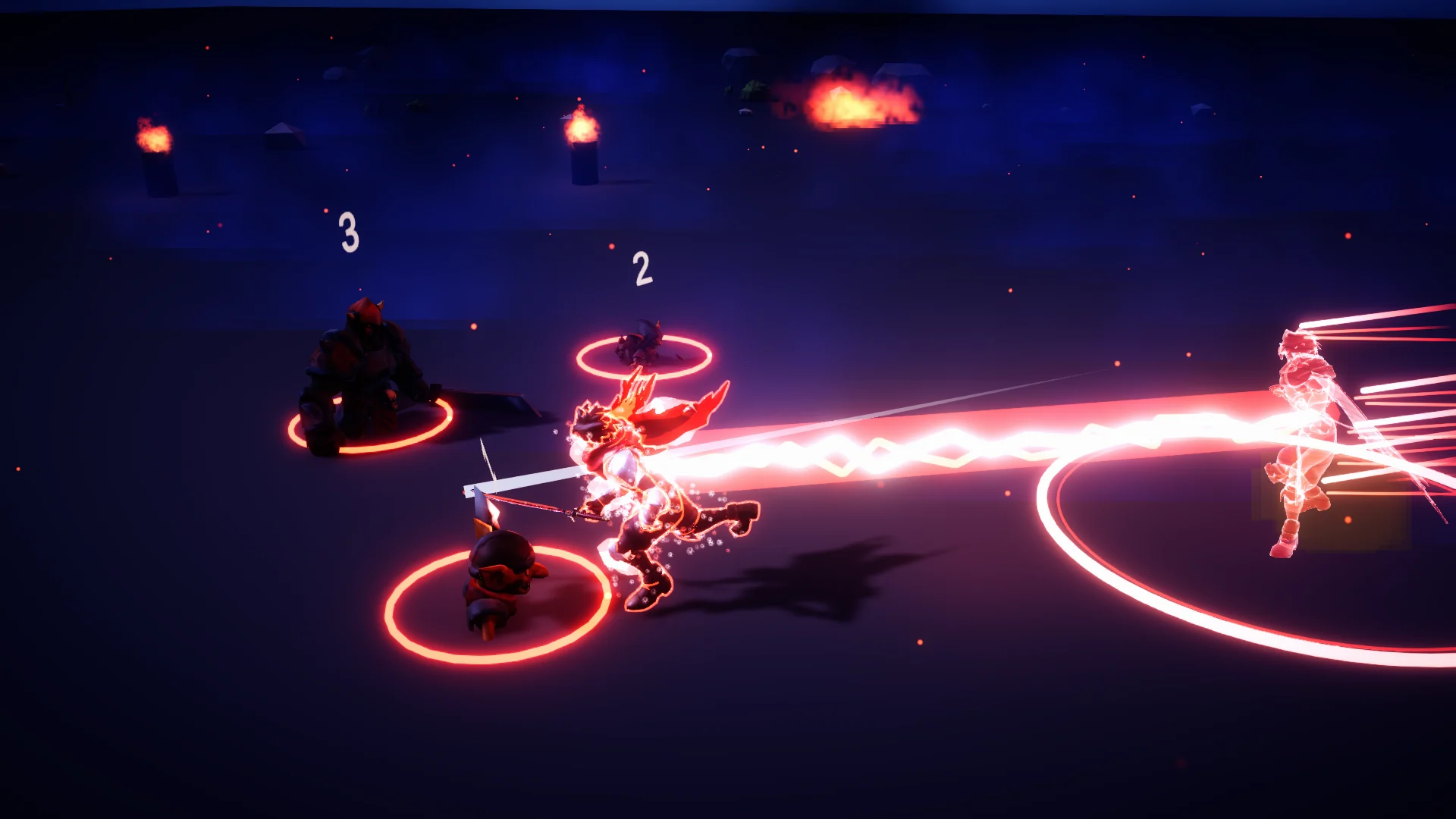
Blade Rush: mark 1, 2, 3, release, and dash through them in order.
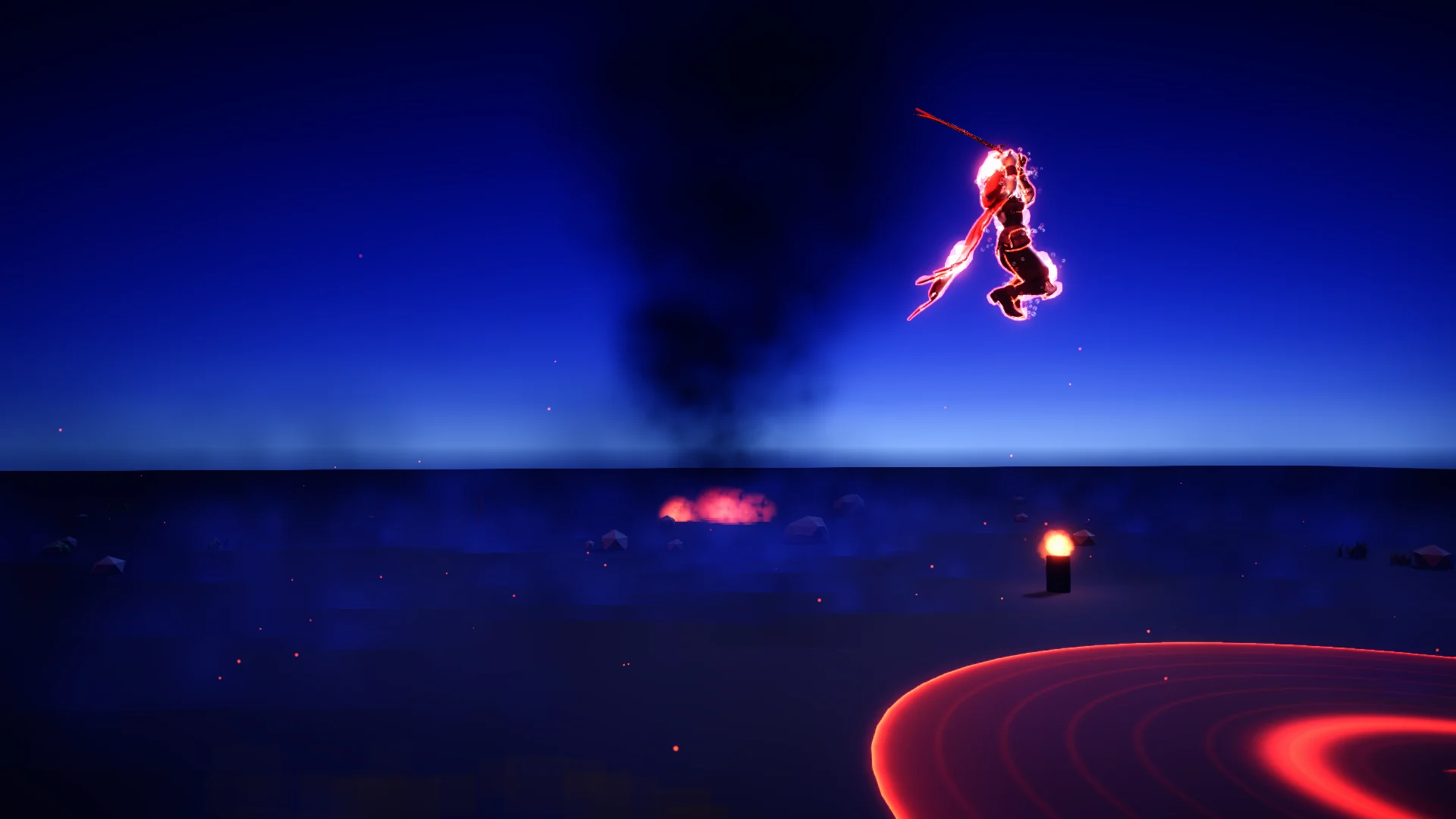
Skyfall: leap, then dive. Press at the top of the jump for a perfect dive.
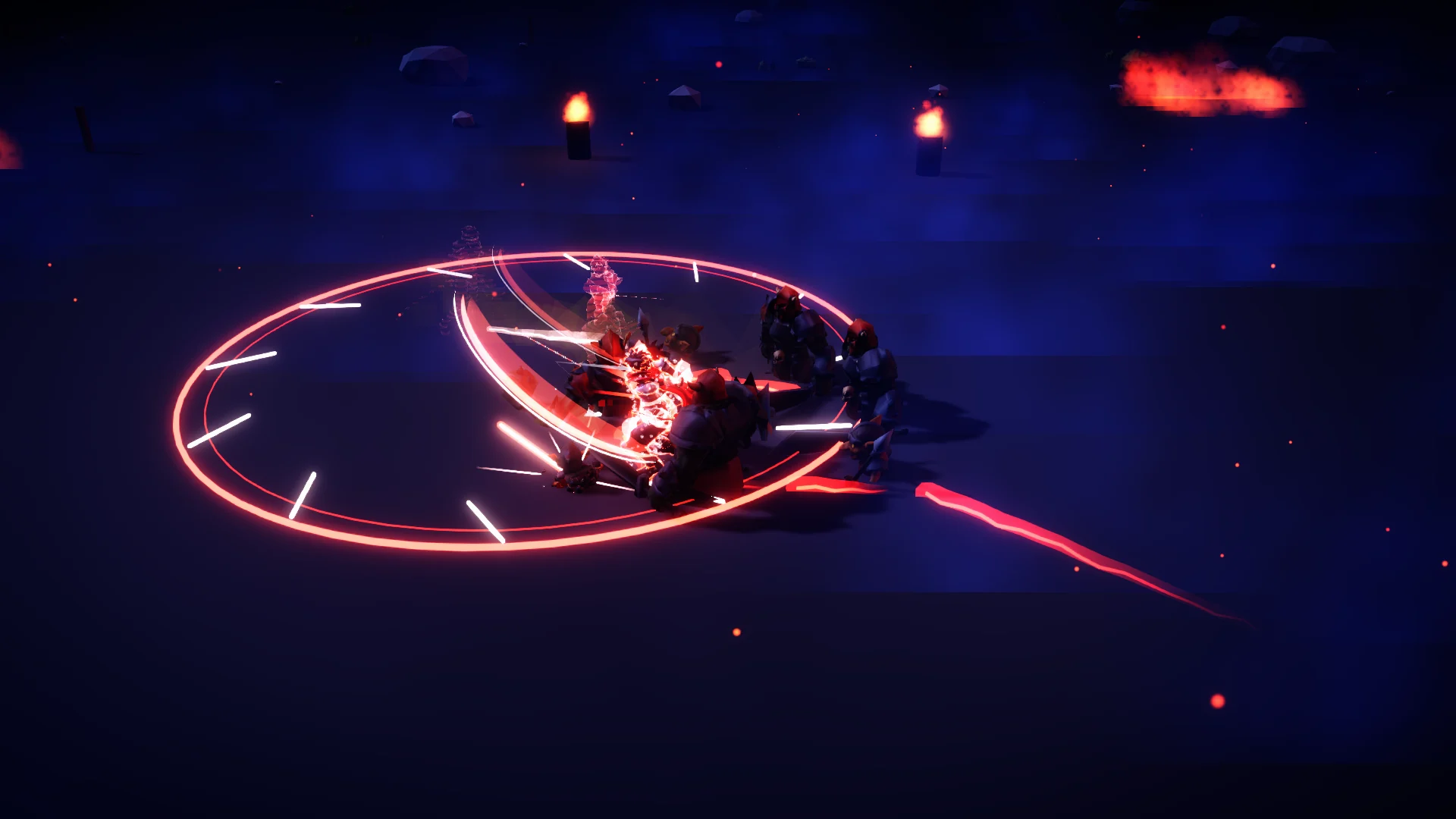
Endless Assault: round after round, as long as you keep the rhythm.
Animating a sword with Python
The Fighter model came without a skeleton. I gave him one, and generated all his animation with Python scripts driving Blender: 22 clips for walking, running, the three-hit combo, every ability, jumping, getting hit and dying. The scripts describe key poses and swing arcs; the maths places the arms and hands. The hardest part was the grip. A sword can look perfect standing still and then twist the wrist into something impossible when he runs. The wrist limits, the sword's attachment point and the poses had to be fixed together, several times over.
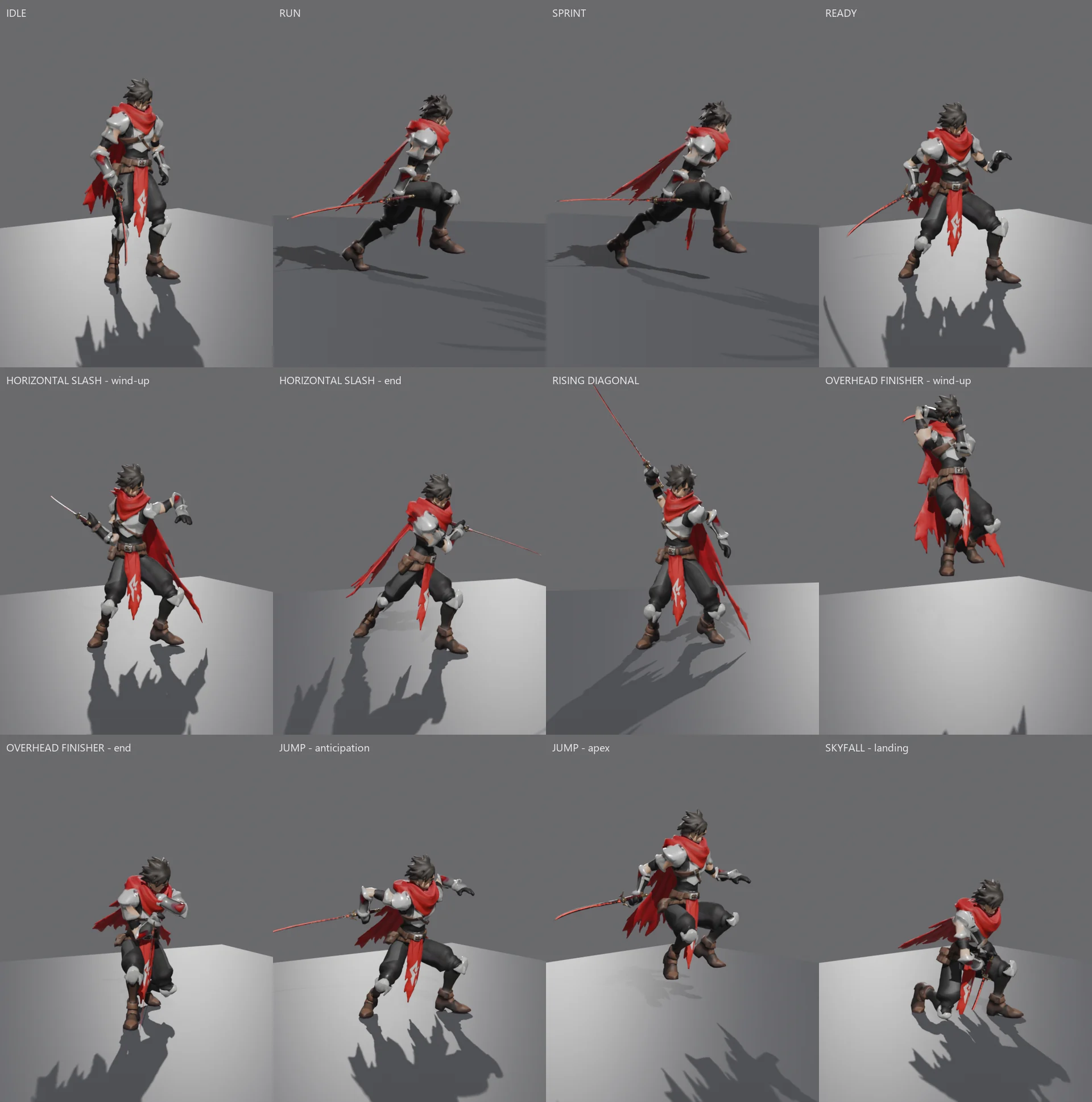
Review sheet of the generated poses: run, prepare, strike, land.
The katana grows with you as well, in four steps: a wooden training sword, plain steel, a master-crafted blade, and finally the Red Storm, with glowing red veins along the blade.
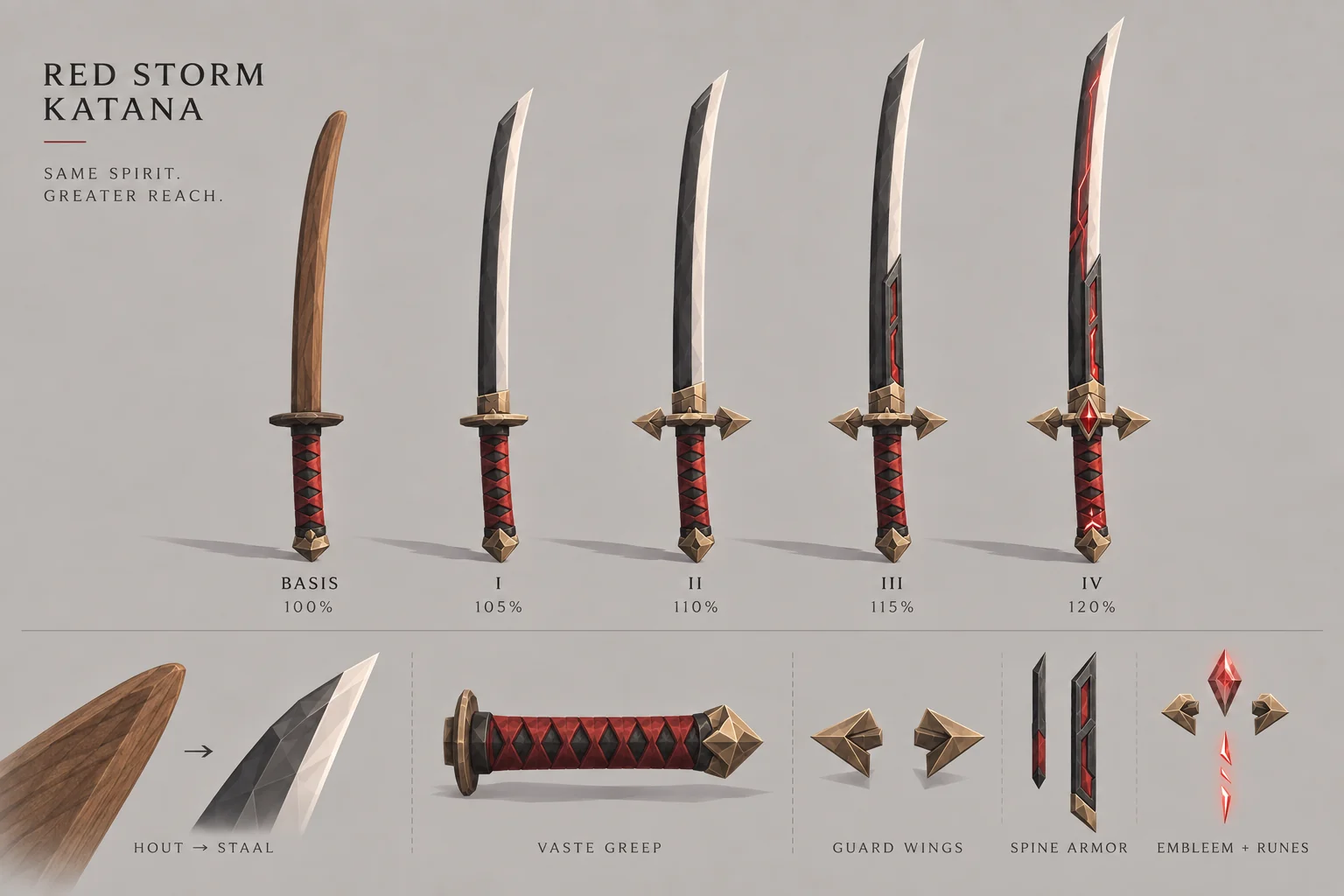
Concept art for the katana's growth.
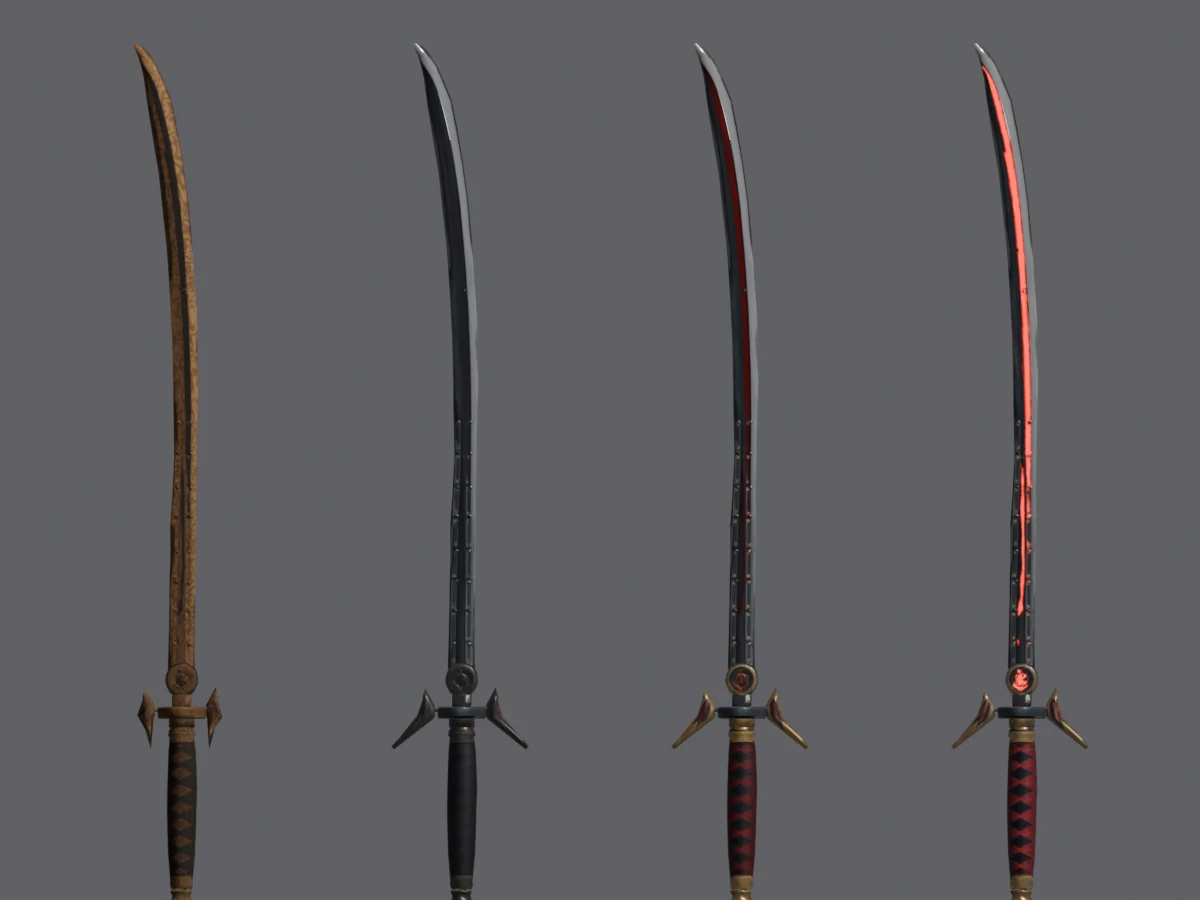
The four katana tiers as modelled for the game: wood, steel, master-crafted and the Red Storm.
The Maul: the opposite approach
Where the Sword is fast and light, the Maul is heavy and planted. Two hands on the hammer, hips turning into the swing, feet planted to take the impact. The weight is in the wind-up and the recovery; the hit itself has to feel like a truck.
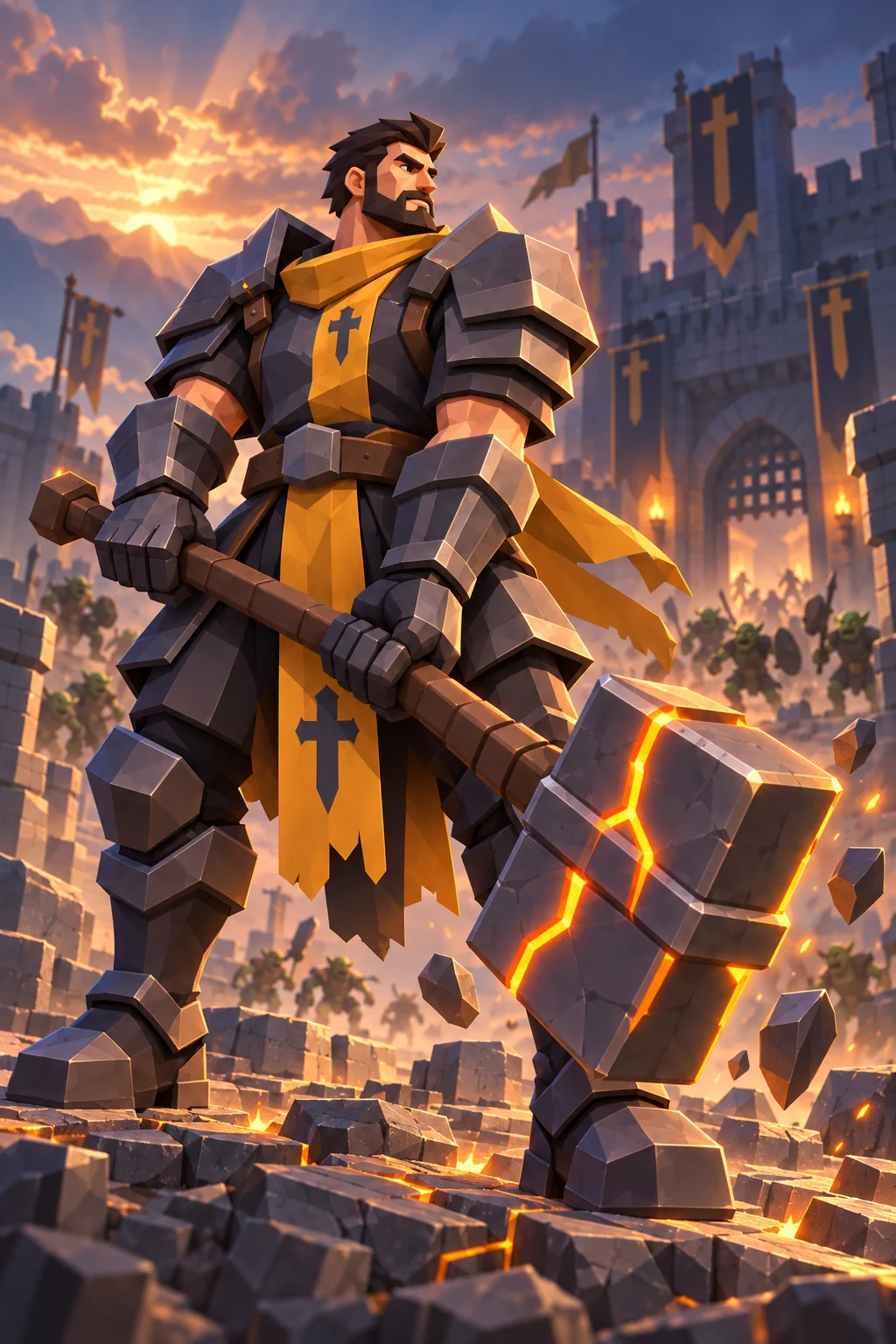
Concept art: the Maul Soldier.
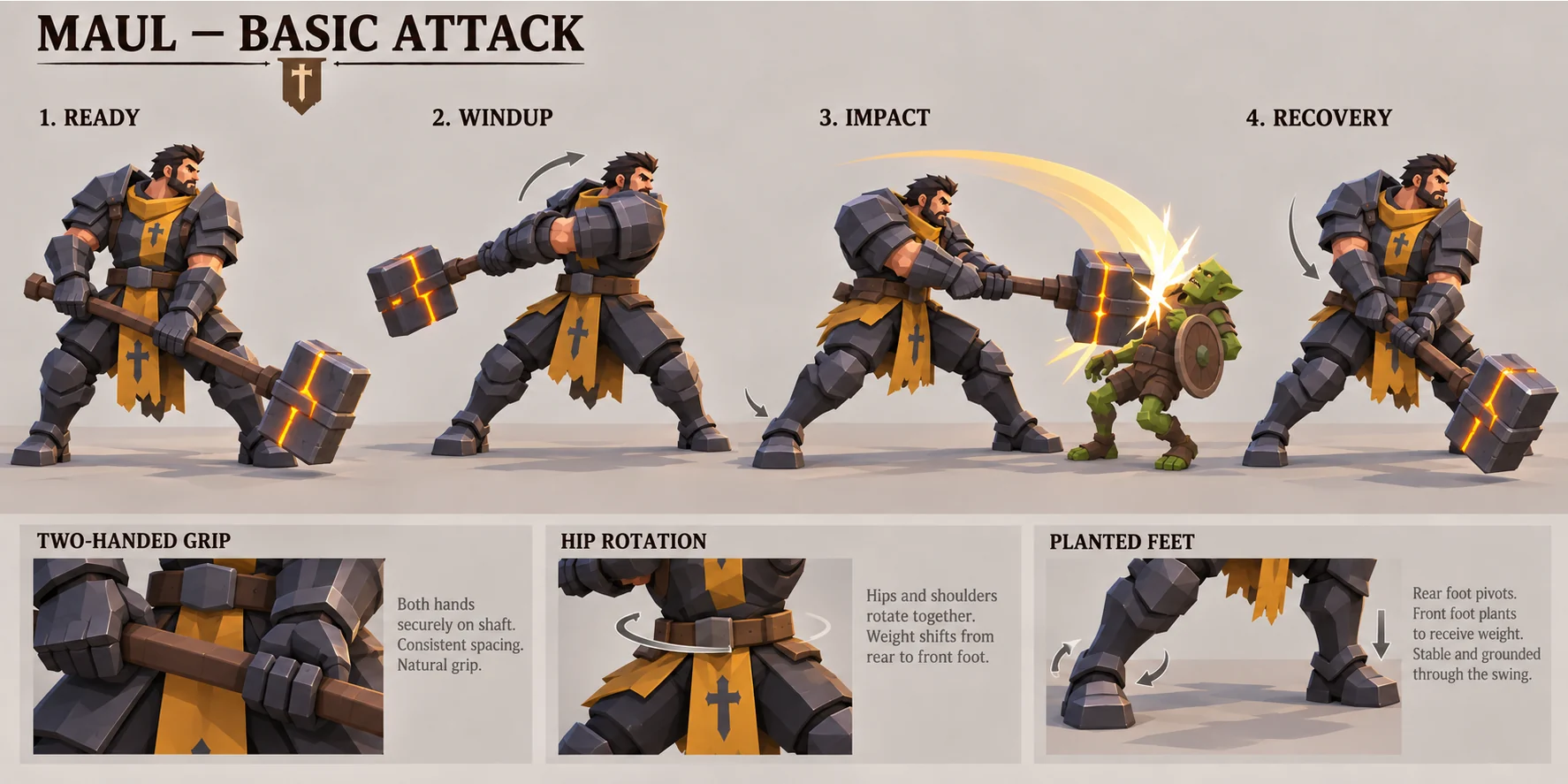
Concept art: ready, wind-up, impact, recovery.
The Maul kit is built around one idea: enemies are projectiles. A Breaker Swing launches an enemy along your aim. If it crashes into a wall or another enemy, both take damage and you get a short window for a Follow Through. Thunderclap slams the ground and throws everyone around you into the air. Press again just as they land for a Perfect Clap that throws them outward. Fault Line cracks the ground in a line, and you can detonate it later, for extra damage if enemies are flying over it at that moment. And World Ender: mark one enemy, confirm, watch the hammer rise, and press at the flash for the perfect blow. It leaves a crater and stuns every enemy on the field for half a second.
Good timing builds Force. At three Force the hammer's cracks light up and the next ability is Empowered.
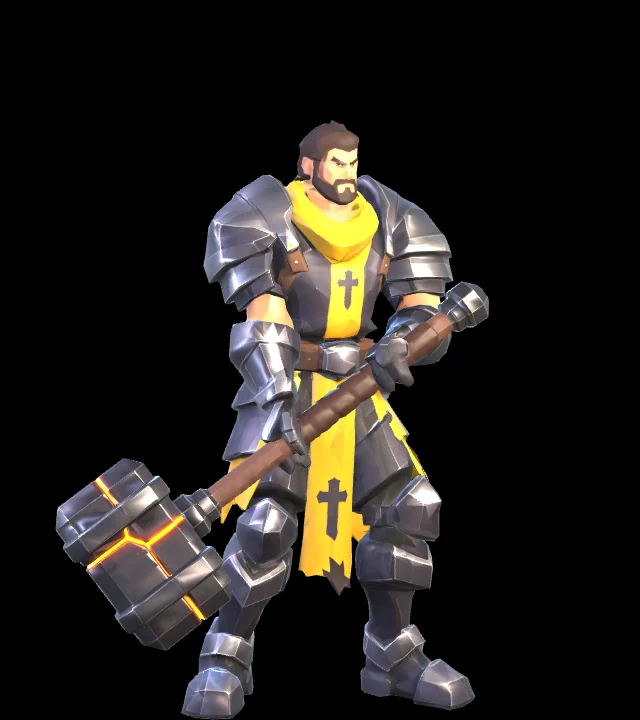
The Maul Soldier: knight body with a glowing warhammer and amber accents.
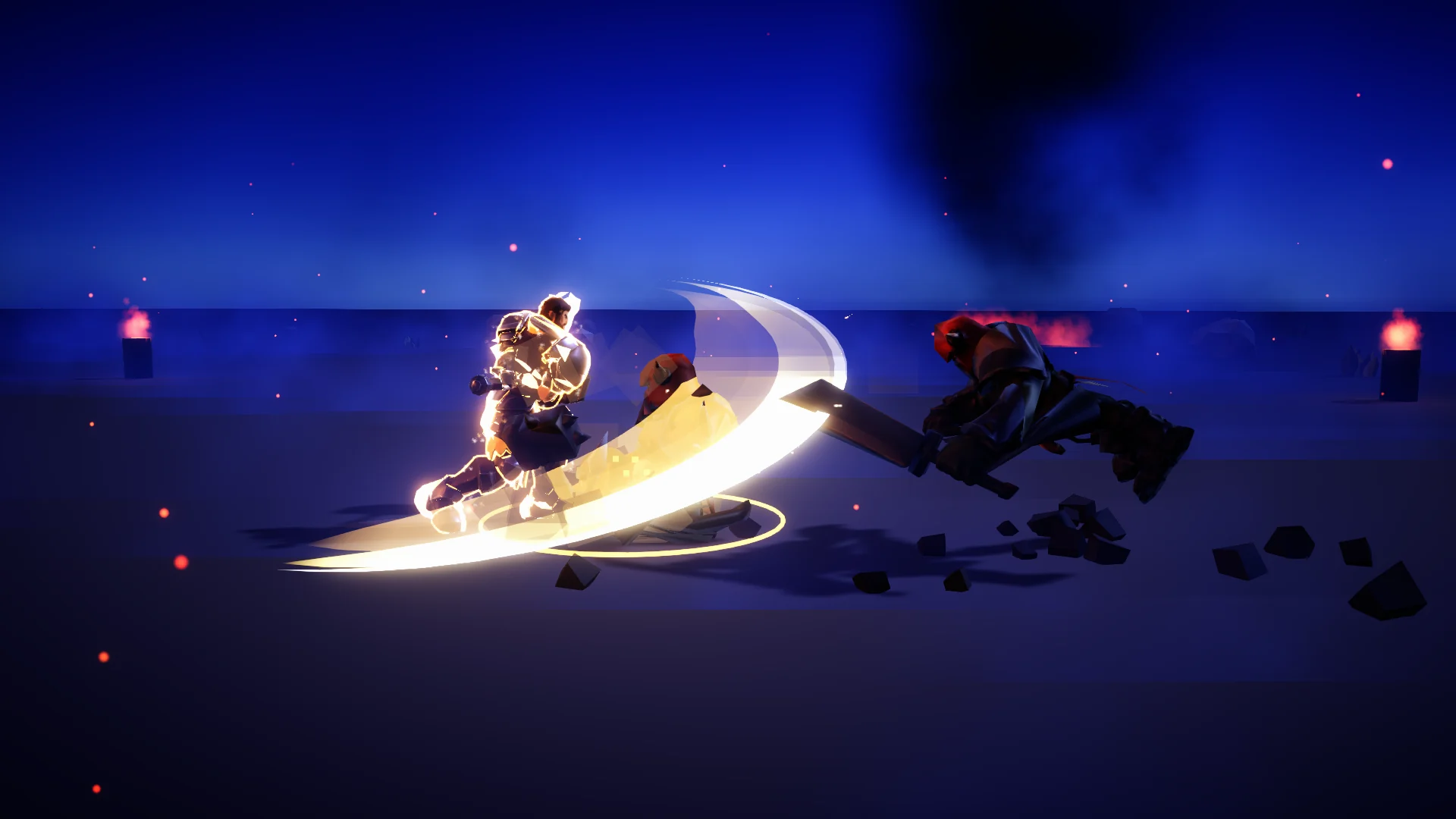
Breaker Swing: the enemy becomes the projectile.
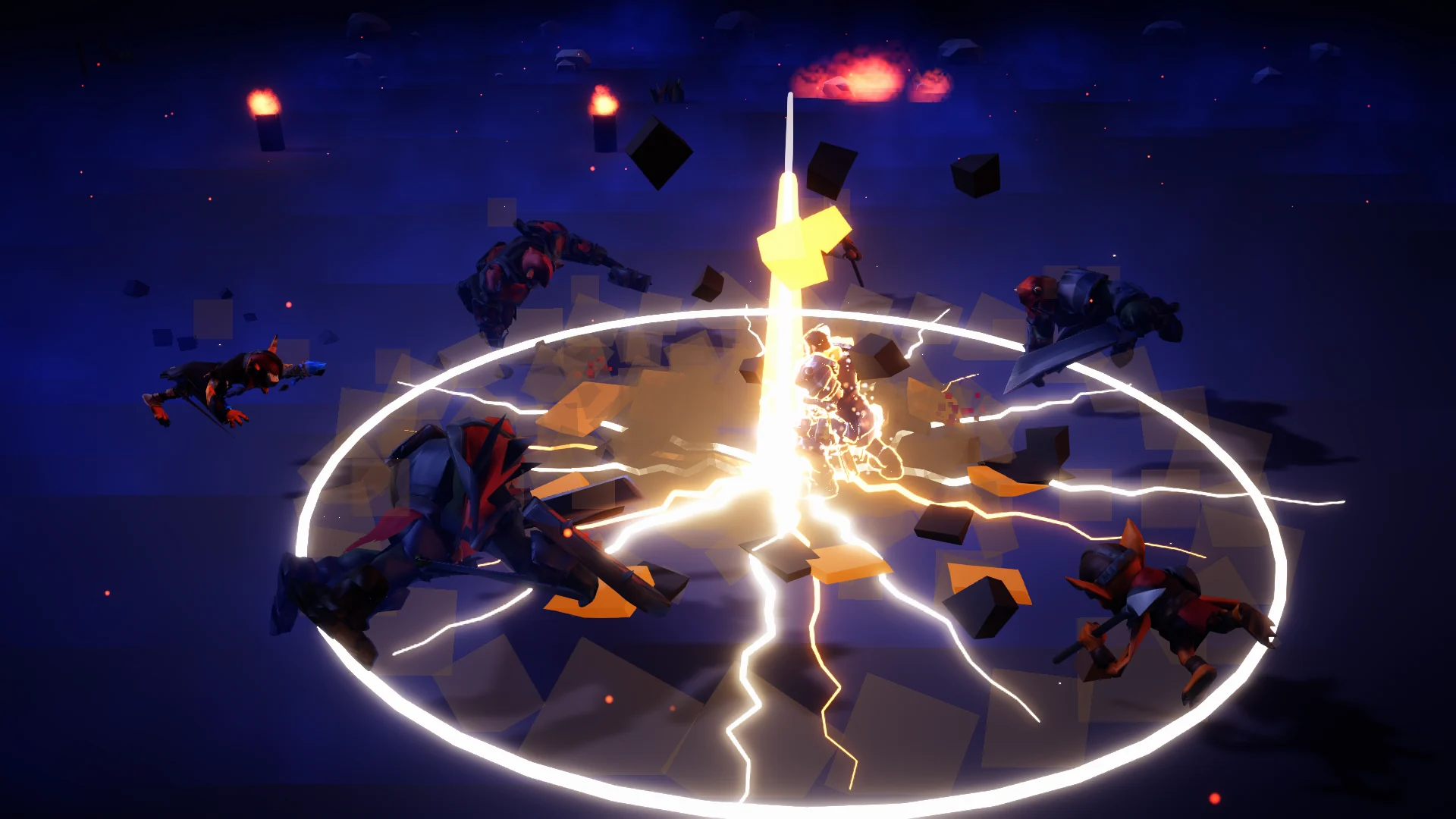
Thunderclap: lift them, then press as they land.
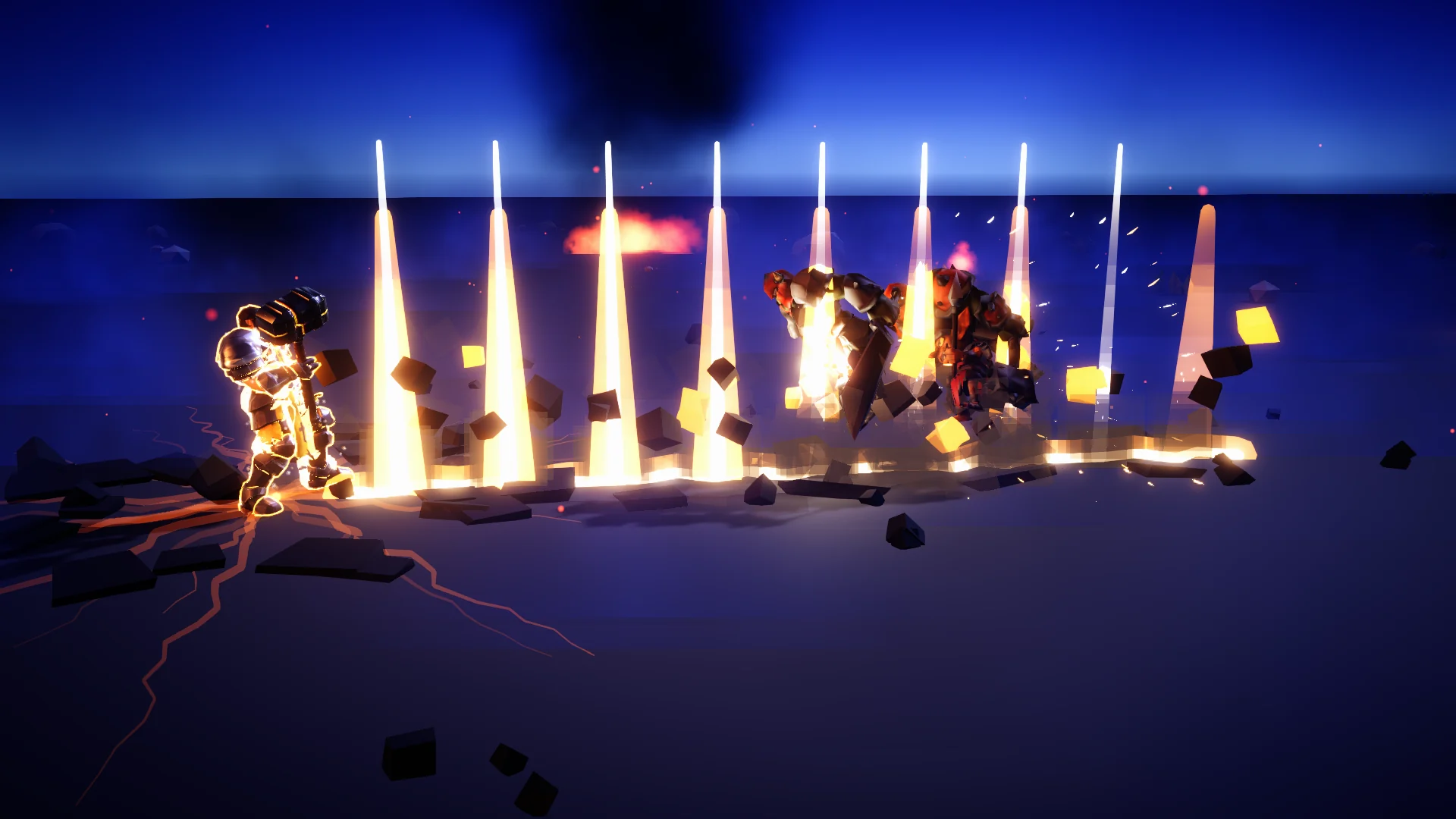
Fault Line: detonate while they fly over it.
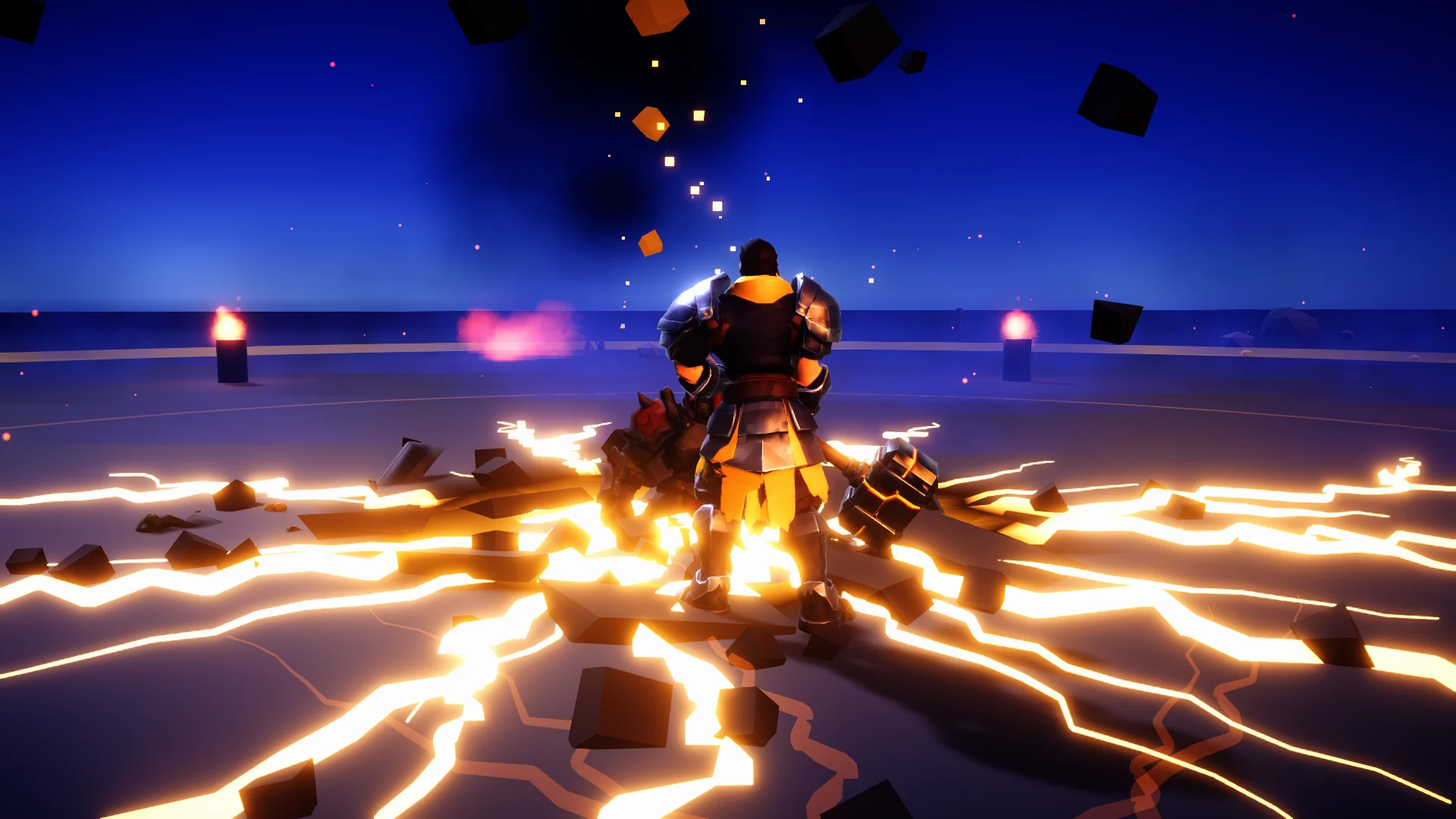
World Ender: the crater, and every enemy on the field stunned.
What we ran into
The first playtest of the Maul turned up three things. An enemy killed by a swing simply vanished mid-air, which felt wrong. Now the body keeps flying along the same arc, and can still knock over whatever it hits. The flying bodies looked stiff as planks, so they got limp, rope-like bones. Not a full physics ragdoll, but enough to tumble believably. And when one enemy hit another, the chain just stopped dead. Now the enemy that gets hit is carried along a bit, and the first one follows through.
World Ender also changed after that playtest. It used to fire straight away; now it's aim, confirm, charge, strike, which makes the perfect press a real decision.
Both sides of co-op
Every one of these abilities has to look right for the other players too, not just on your own screen. The Sword, the Maul and Shadow were tested over LAN and over the internet relay, with the hero on the host and with the hero on a client, plus a run with 80 enemies. All thirteen scenarios passed on that development build.
What's next
Next up is fine-tuning: the timing windows, the stamina and the impact of both weapons in real fights. After that comes Sword & Shield, the defensive option for the Soldier, and later the Hunter.
In the last post of this series I'll go into the balance sheet: how we check whether all of this adds up, and what it told us that we didn't want to hear.