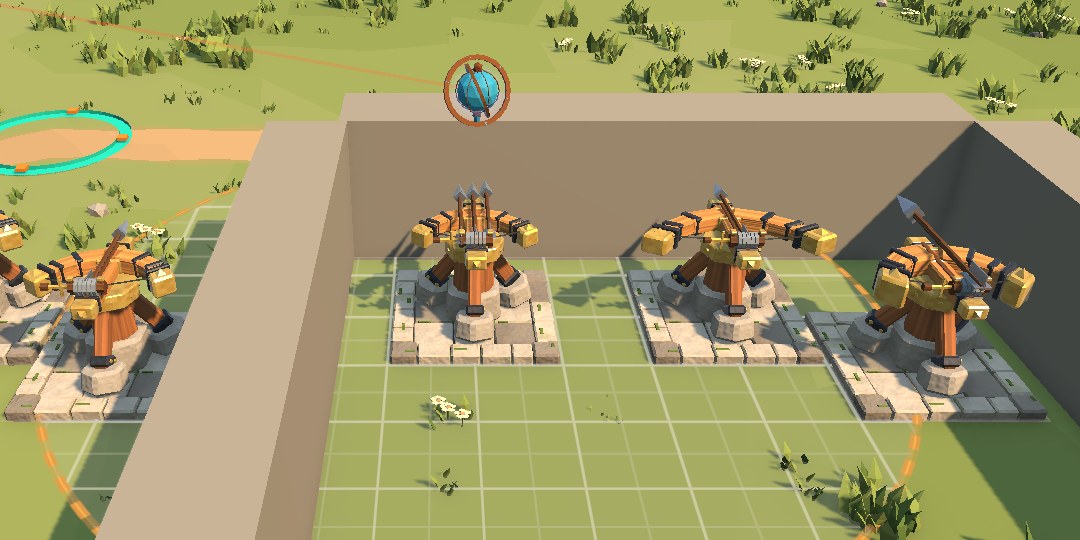
Two weeks ago our Builder was a floating blue orb. He placed towers and walls from above, and in co-op he mostly watched while the heroes did the fighting. Today he is a dwarf with a hammer who walks the field, strikes, throws stones, mends walls and makes his towers stronger. This is how that happened, including the parts that did not work at first.
The problem: too strong, and nothing to do
In our playtests the Builder had an odd role. On paper his towers were far too strong: with the same gold they did up to almost four times what a hero did. Yet during a wave he had nothing to do but watch. He had nowhere to put his gold and experience except more towers, and he hardly played together with the heroes.
The runesmith had to fix all of that: towers closer to a hero's strength, something to do during a wave, something to spend gold and experience on, and more interaction with the heroes.
Choosing a character
We drew several directions, from a dwarf on foot to a runesmith flying on a slab of stone. I chose the runesmith, but without the flying. He walks on the ground like a hero, and when you press B he kneels while his orb rises into the familiar build view. His body stays where he knelt, and enemies can hit it.
The first version reached our main build on 11 October: a dwarf with a hammer strike, a stone throw, Rune Glow (a tower nearby fires faster), Anvil Drop (an anvil that stuns), and a Mending Hammer for his towers. A day later the hammer also repaired walls and rebuilt fallen buildings.
Honest: it did not work yet
When I played him myself, a few things were clear quickly:
- He was too weak. In the first waves he could hardly kill anything.
- The orb floating above his head looked like the main character, not the dwarf.
- His blows showed nothing: no weight, no sparks, no sound.
- His combo took too long, and he stood still at the last blow.
- His walk felt clumsy, and he looked shiny, as if he were made of plastic.
The turnaround
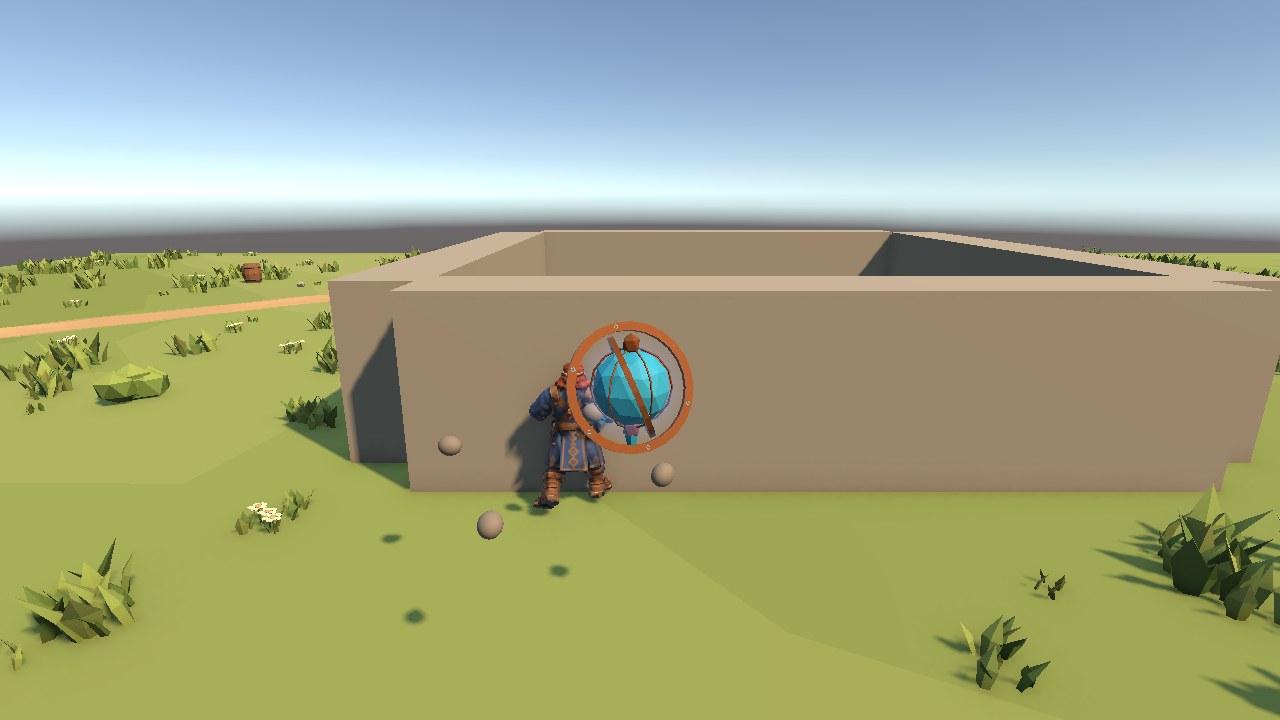
The orb became a small lantern behind his shoulder. It only wakes up when you press B and rises into the build view.
His blows got weight: a trail, sparks, a clang and a short pause on the heavy hit. He is strong from the start, and the heavy third blow hits everything around its target. You can now walk through the whole combo, and stones fly at a steady rhythm while you hold the button. His walk was rebuilt in our unit lab, and his look became matte with a soft glow in the runes. He even jumps properly now.
A hero, but the towers stay the weapon
The runesmith is now a hero like the others. He has his own card in the hero menu, earns renown and has a talent web, with two elemental schools to choose from. Every level-up gives him a smith's card to pick. Outside the campaign the Builder is always a runesmith, and a new player can pick him on the very first hero screen.
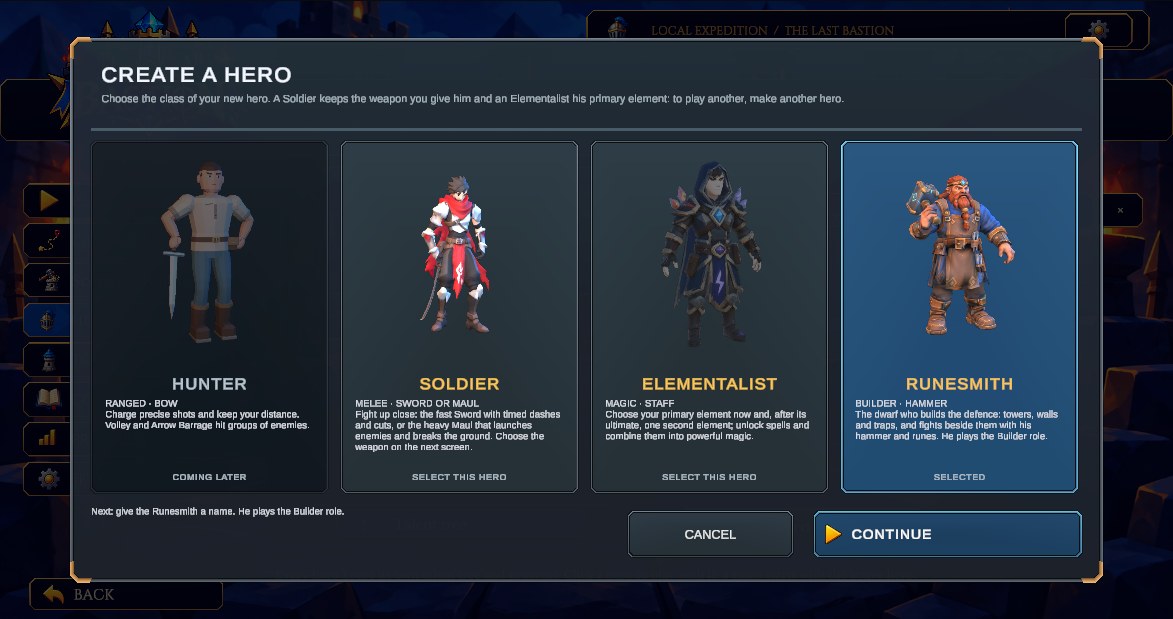
His own damage grows, but his towers stay the main weapon. Towers near him get stronger. Towers that hit enemies attacking his walls do extra damage. And his hammer keeps everything standing. On paper that solves all four problems. Whether it plays that way, we still have to find out and tune.
What's next
We are now working on upgrades for walls, gates and traps, and on showing how much time a maze buys you. More about that next time.
How we make this
Screenshots and clips come from development builds, and everything shown is still being tuned. We use AI in several places: for code, for concept art and some 3D models (which we rig and animate ourselves), and for voices and sound. This post was drafted with AI help and checked against our own notes.
About me
I'm Tim, one of the three developers at Three Crown Interactive. I've been playing games for 35 years, from the Nintendo to the PS5, though the PC has always been my favourite. In my working life I often built things on the side, to improve processes or produce reports. Now I get to use that in a completely different way. On The Last Bastion I work on the Builder, the towers, pathing (how the horde finds its way) and the co-op network.