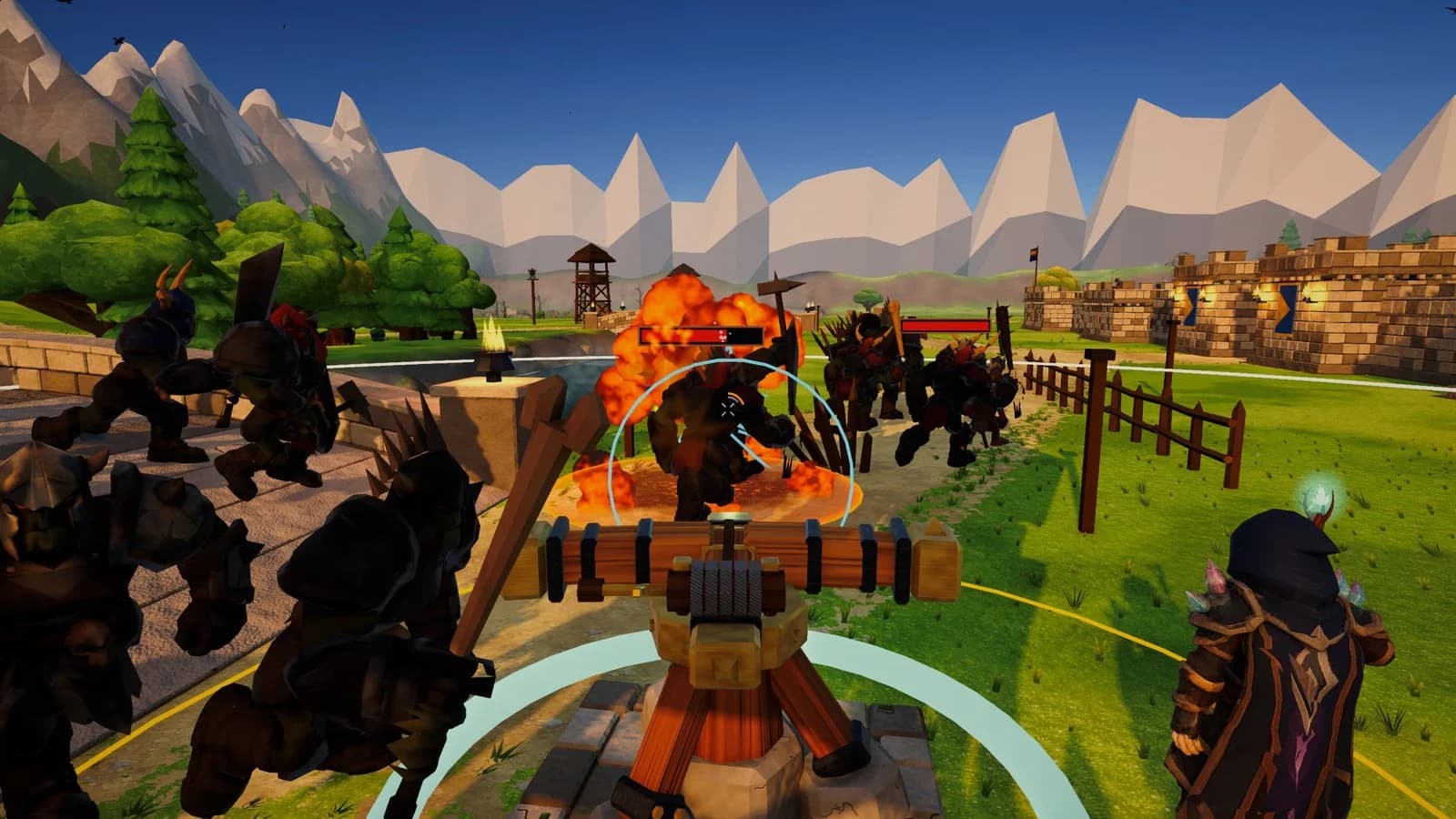
Until this month a tower in The Last Bastion was something the Builder put down and then left alone. It picked its own target and fired by itself. Now a hero can walk up to a Ballista or a Mortar, take it, and shoot it by hand. And his own abilities make the tower stronger.
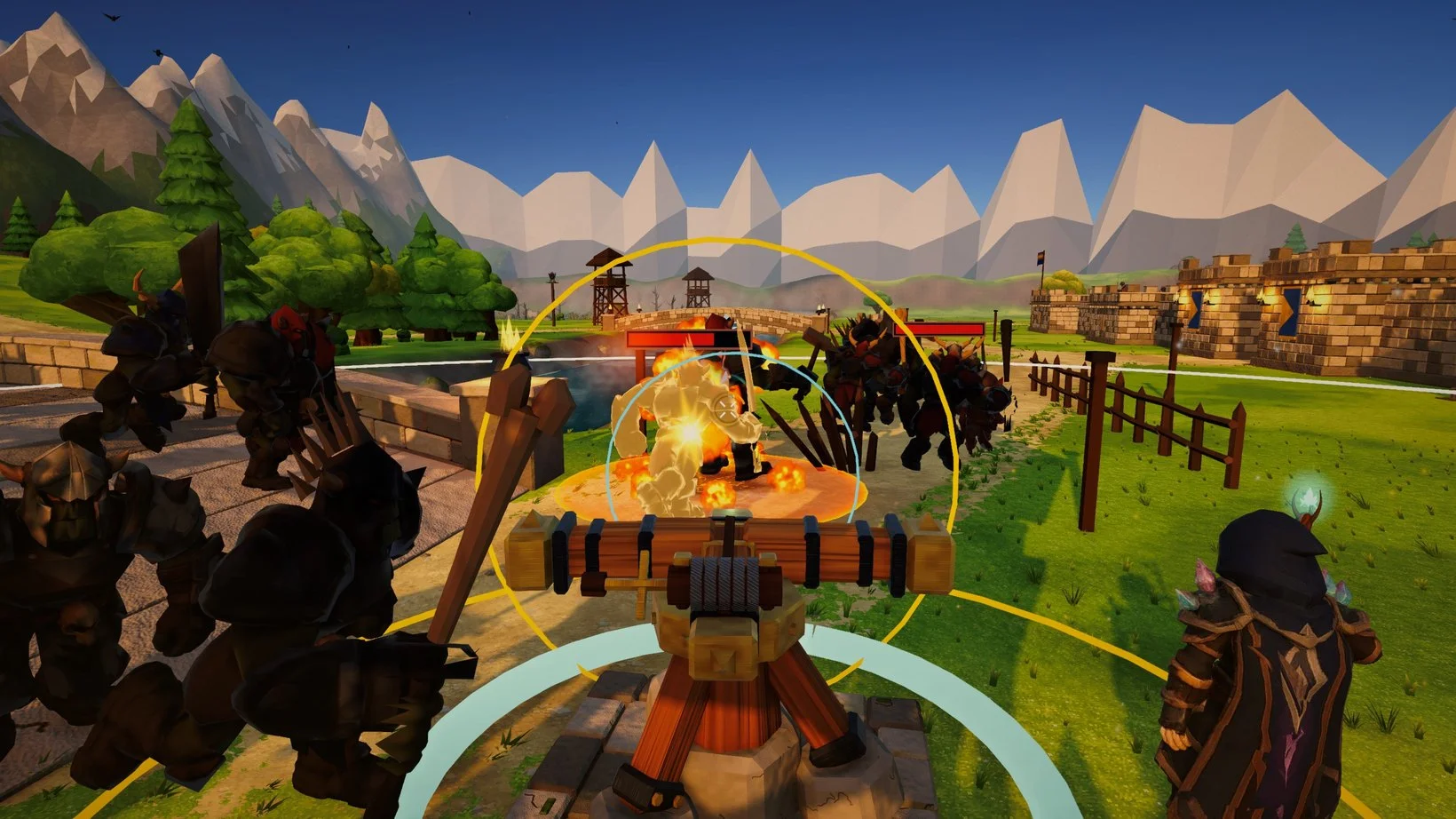 A Fire mage on the Ballista: his Fireball rides the bolt.
We made a short film about it. Our site cannot play video yet, so it lives on YouTube:
Why: the Builder and the heroes should need each other
Our game is about playing together. But in our playtests the Builder and the heroes mostly played next to each other: he built, they fought. A tower was his thing, and a hero had no reason to look at it.
So we turned it round. What if a hero makes the Builder's tower better just by using it?
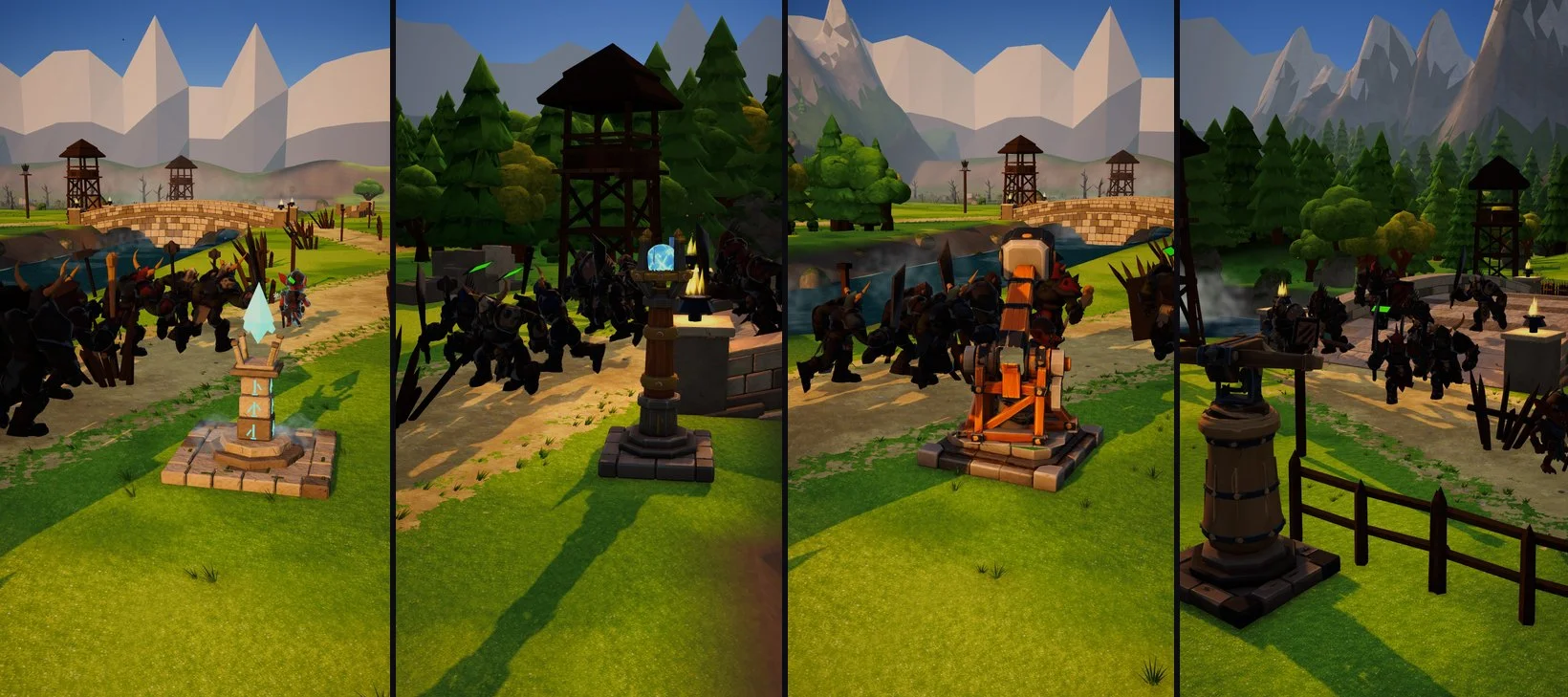 The Builder's towers still fire by themselves. Two of them now have a seat.
The Ballista: draw, hold, release
Press E next to a Ballista and it is yours. The camera moves behind the bow and you aim it yourself. The bolt flies straight, so you can miss. And shooting is not just a click: you hold to draw the string and let go to shoot. That gives a gunner a few things to learn:
- Quick or full. A half-drawn bolt leaves fast, but it is weak and stops at the first enemy. A full draw hits hard and flies on through up to three.
- The perfect release. Let go just as the bow reaches full and the bolt hits hardest of all.
- Headshots. A bolt to the head does clearly more.
- Shields. A shield bearer hit from the front shrugs most of it off, unless your bow was fully drawn.
- Three in a line. Each further enemy on the bolt's line takes more than the one before, so it pays to wait until they line up.
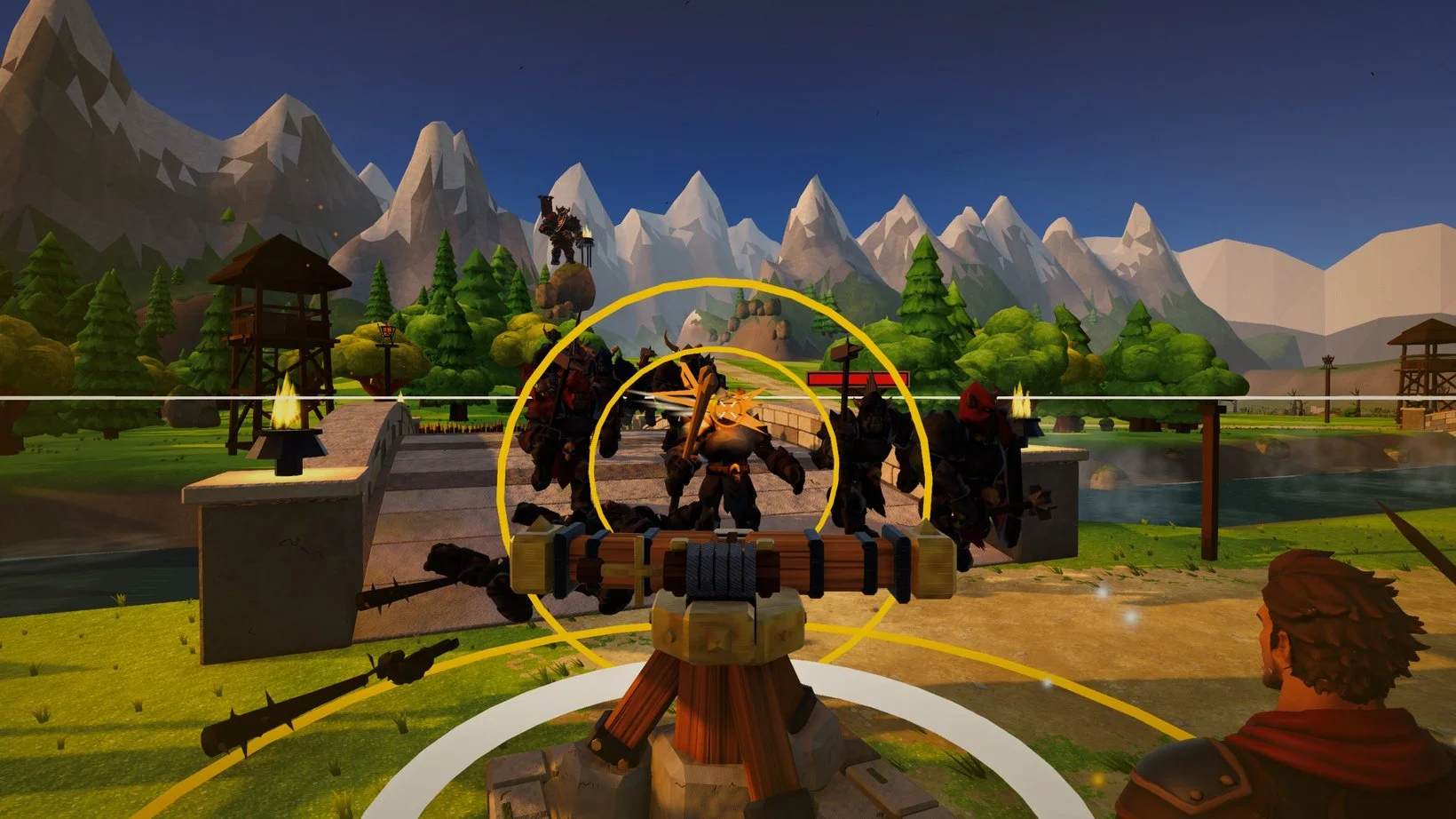 The ring shows the draw. Let go in the window and the bolt hits hard.
Good shooting builds up. Every hit sharpens the tower, and a headshot sharpens it more: the bow draws faster and faster, and the ring round your crosshair grows with it. Miss, and you lose part of it again. So a calm gunner who keeps hitting heads ends up shooting far quicker than one who just holds the button.
Does a hero shoot better than the tower does by itself? That is exactly the question we are still playing with. It should feel worth it to stand still for a while, but not so strong that everybody wants to sit on a tower all game.
The Mortar: two guns in one
The Mortar got two stands. With the barrel up it lobs a shell to a circle you lay on the ground: slow, but it hits a whole group, and it falls from above, so a shield wall does not stop it. Your team can see the circle and hold the enemy in it. With the barrel down it is a cannon that shoots straight ahead, much easier to aim: the ball ploughs through a row of enemies and stuns them for a moment. One key switches between them, and good shooting sharpens the Mortar just as it does the Ballista.
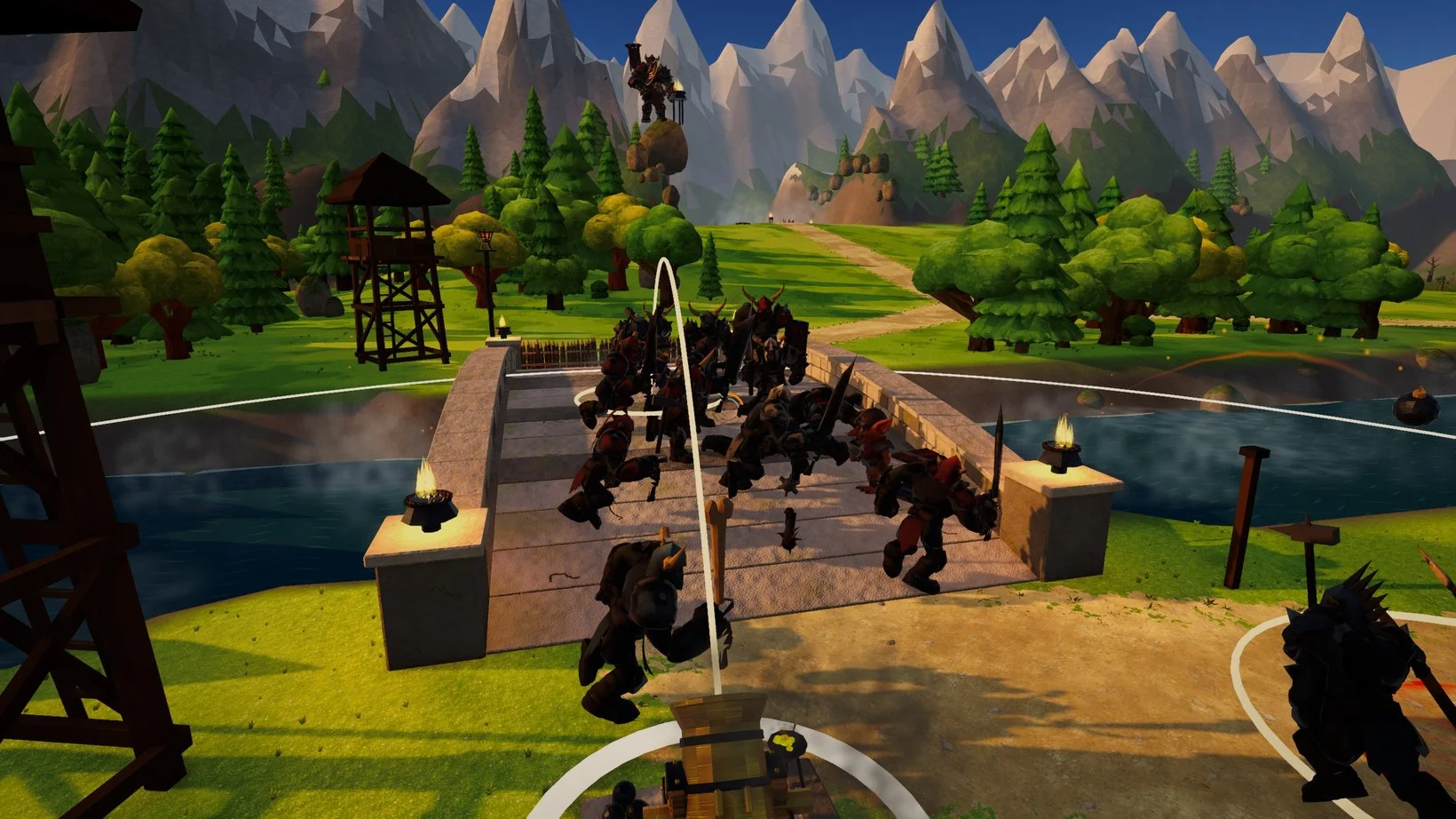 Barrel up: a lobbed shell on a group.
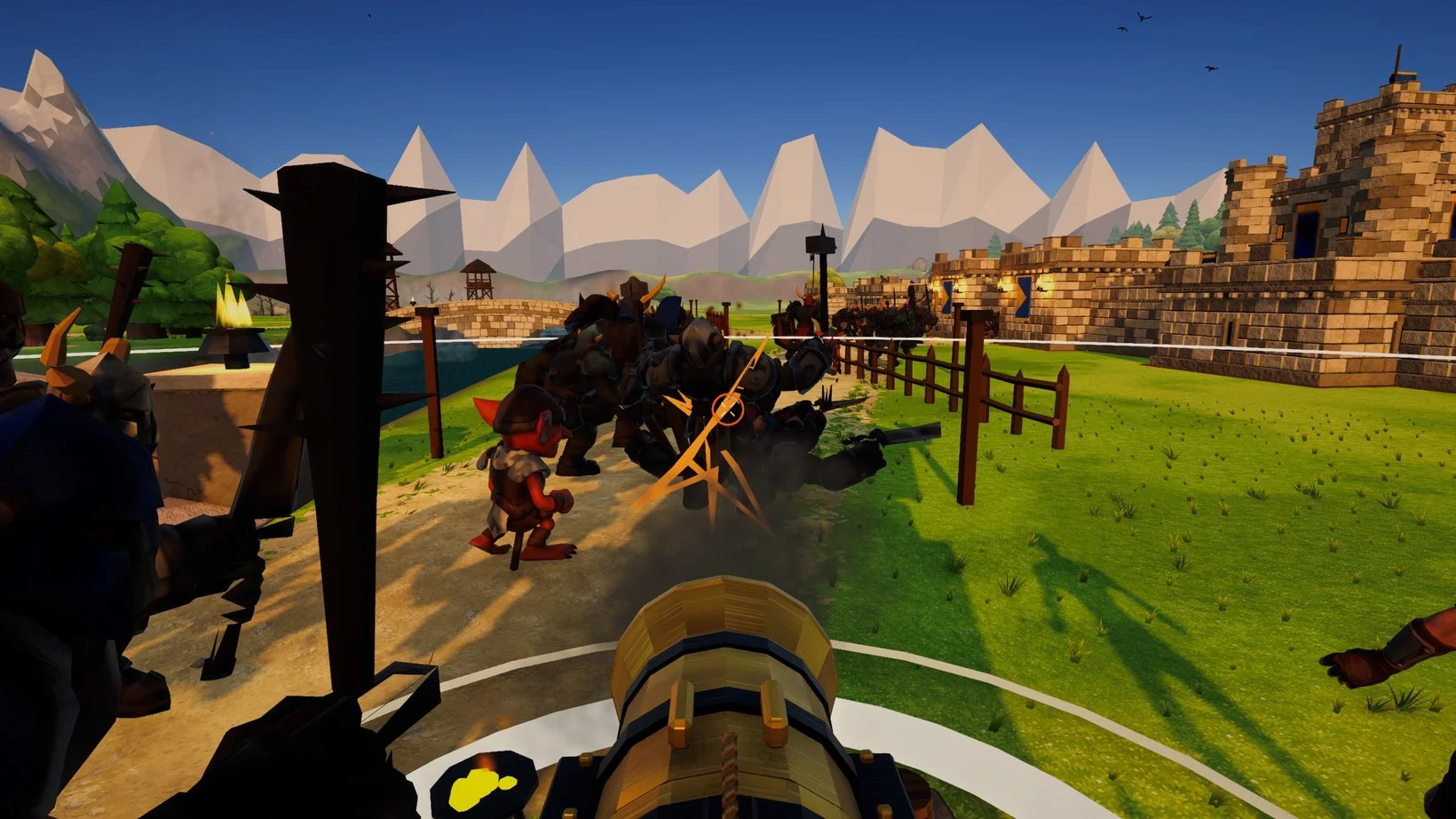 Barrel down: a cannon for whoever comes too close.
Your hero's abilities, through the tower
This is the part I like most. A hero does not have to take the tower to help it. There are three ways to work with one:
- Strike it. Hit a Ballista with one of your attacks and its bolts carry your element for a short time, after which the tower rests. Fire burns, ice chills, lightning jumps on to a second enemy, nature roots its target and shadow weakens it. A hero without an element winds the tower up, so it fires faster.
- Stand by it. While you stay next to it, the tower keeps your element and reaches further.
- Take it. Your own strength is in every bolt, so the tower grows with your hero and not only with its own level. And your abilities go with you: a Fire mage's Fireball flies along on the bolt and bursts where it lands. On the Mortar your element goes into the shell; a fire shell leaves burning ground.
It also feeds our team combos. Whatever the tower puts on an enemy counts as a teammate's work: the hero who strikes that burning or frozen enemy next gets the team bonus.
The runesmith, our Builder on foot, can take a tower too.
Honest: what is not right yet
- It is a first version. How hard a bolt hits, how long the fire lasts and how much the draw matters are all still being tuned.
- The bonus for good shooting only makes you faster for now. Next we want to let you spend it, on a whole bundle of bolts in one shot.
- Only Fire has an ability that rides the bolt. The other elements are next.
- While you hold a tower you cannot step aside. One enemy used to pull the gunner off his tower with a hook, again and again. Now the hook shakes the gun instead: you lose a moment, but you keep your seat.
- The clips here were staged for the camera: a strong tower, and orcs set on the bridge.
How we make this
Screenshots and clips come from development builds, and everything shown is still being tuned. We use AI in several places: for code, for concept art and some 3D models (which we rig and animate ourselves), and for voices, sound and music. The voice and the music in the short are made with AI. This post was drafted with AI help and checked against our own notes.
About me
I'm Tim, one of the three developers at Three Crown Interactive. I've been playing games for 35 years, from the Nintendo to the PS5, though the PC has always been my favourite. In my working life I often built things on the side, to improve processes or produce reports. Now I get to use that in a completely different way. On The Last Bastion I work on the Builder, the towers, pathing (how the horde finds its way) and the co-op network.